Tailored Surfaces
Functional coatings via plasma-assisted processes at ambient pressure
We develop coating processes based on atmospheric pressure plasmas. The goal is to produce functional coatings directly under ambient conditions, particularly on temperature-sensitive materials and for large-area applications.
Plasma-based coating at atmospheric pressure
- Use of atmospheric-pressure plasmas for coating deposition and modification
- Conversion of molecular precursors into oxide and hybrid coating systems
- Processing at ambient pressure and low temperatures
- Suitable for sensitive substrates such as polymers and functional surfaces
Reactive species and process control
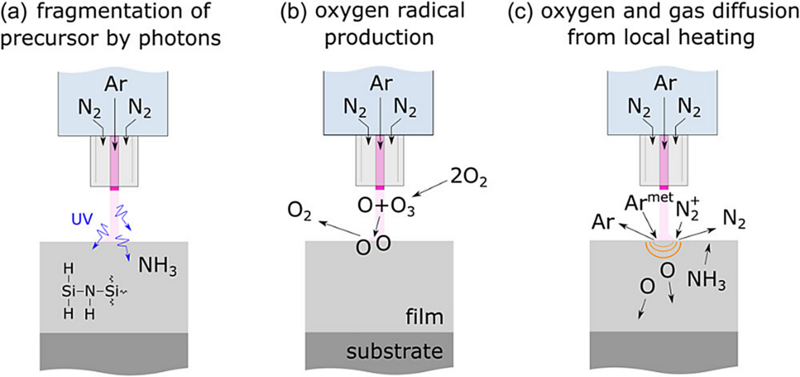
- Use of electrons, ions, photons, and radicals to initiate reactions
- Targeted fragmentation and cross-linking of precursor molecules
- Investigation of the influence of plasma characteristics on film formation and properties
- Establishment of parameter-effect relationships for controlled processes
Applications and functional coating systems
- Coatings for barrier technologies, surface protection, and functional coatings
- Application on temperature-sensitive and large-area substrates
- Potential for scalable and industrial coating processes
Contribution to the development of application-oriented coating technologies
- Production of functional coatings under realistic process conditions (atmosphere)
- Combination of plasma physics, chemistry, and materials science
- Basis for customized coating properties
- Contribution to the development of efficient and transferable technologies
Projects
PlasBar – Atmospheric-pressure plasmas for the production of functional gas barrier coatings for the energy sector
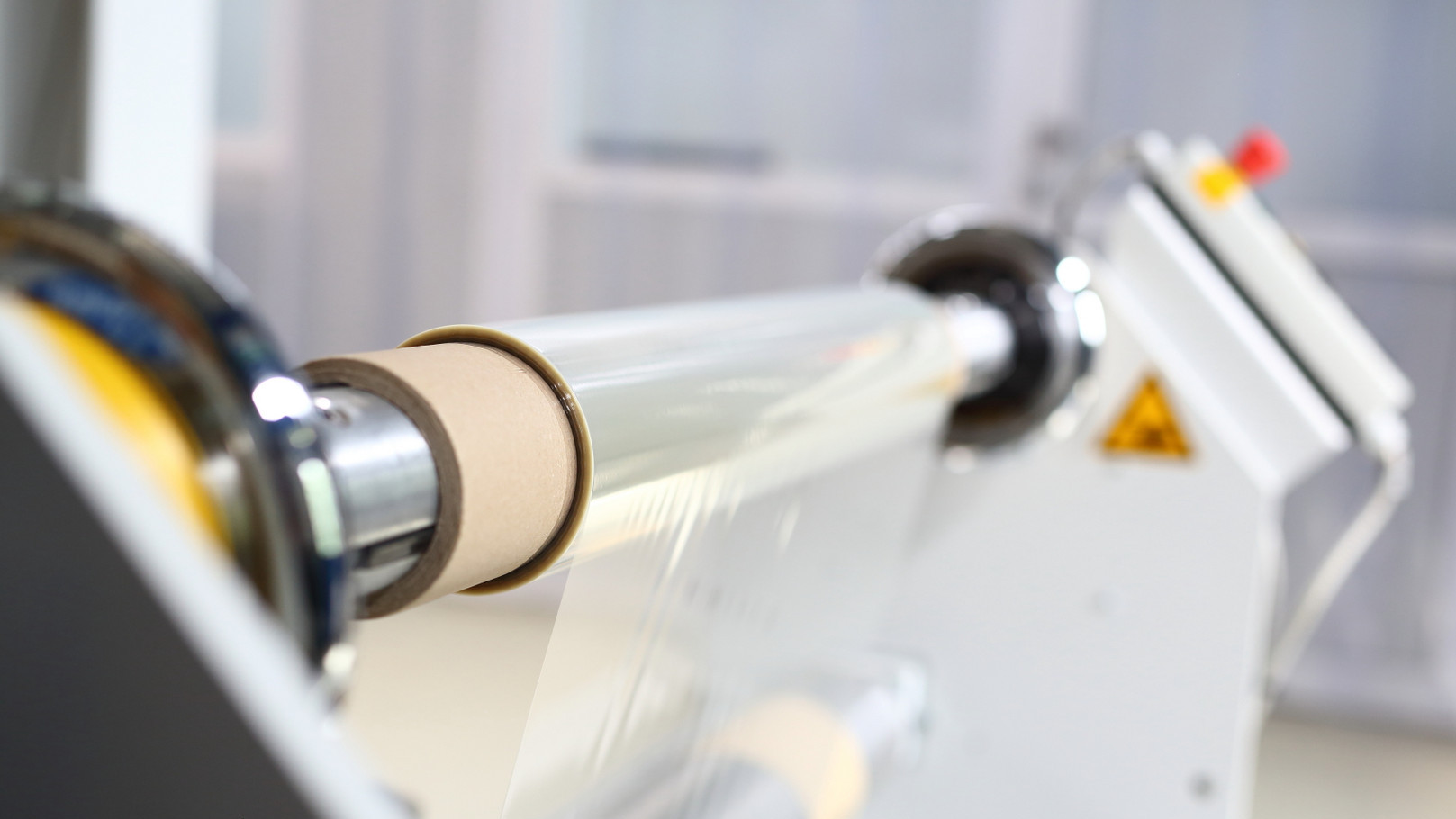
PlasBar was launched in 2024 as a feasibility project, during which the initial potential of atmospheric-pressure plasmas for lightweight, flexible, and gas-tight oxide coatings in photovoltaics and hydrogen storage was successfully identified. This work is now being continued in a validation project running through 2027, in which atmospheric pressure plasma technology is being tested in an industrial setting for roll-to-roll (R2R) processing, with thin functional layers being applied to polymer films.
Funded by the Saxon State Ministry of Economic Affairs, Labor, and Transportation (FRL Validation) and the European Regional Development Fund (ERDF)

PlasBar – Atmospheric-pressure plasmas for the production of functional gas barrier coatings for the energy sector
PlasBar was launched in 2024 as a feasibility project, during which the initial potential of atmospheric-pressure plasmas for lightweight, flexible, and gas-tight oxide coatings in photovoltaics and hydrogen storage was successfully identified. This work is now being continued in a validation project running through 2027, in which atmospheric pressure plasma technology is being tested in an industrial setting for roll-to-roll (R2R) processing, with thin functional layers being applied to polymer films.
Funded by the Saxon State Ministry of Economic Affairs, Labor, and Transportation (FRL Validation) and the European Regional Development Fund (ERDF)
Publication highlights
M. Rudolph, P. Birtel, T. Arnold, A. Prager, S. Naumov, U. Helmstedt, A. Anders, P.C. With
Low‐temperature atmospheric pressure plasma conversion of polydimethylsiloxane and polysilazane precursor layers to oxide thin films
Plasma Process Polym. (2023) e2200229
https://doi.org/10.1002/ppap.202200229
This work investigates the conversion of PDMS and polysilazane layers into SiOx films using an atmospheric-pressure plasma. The process enables the production of high-quality oxide thin films at low temperatures, which is particularly relevant for coating temperature-sensitive polymer substrates.
P.C. With, T. Pröhl, J.W. Gerlach, A. Prager, A. Konrad, F. Arena, U. Helmstedt
Hydrogen permeation through uniaxially strained SiOx barrier thin films photochemically prepared on PET foil substrates
Int. J. Hydrogen Energy 81 (2024) 405
https://doi.org/10.1016/j.ijhydene.2024.07.249
This study investigates the gas barrier performance of photochemically synthesized SiOx layers on PET films against hydrogen under mechanical stress. It demonstrates how uniaxial stretching affects permeability, which is critical to the reliability, safety, and longevity of flexible hydrogen technologies.
D. Marinov, J.-F. de Marneffe, Q. Smets, G. Arutchelvan, K.M. Bal, E. Voronina, T. Rakhimova, Y. Mankelevich, S. El Kazzi, A.N. Mehta, P.-J. Wyndaele, M.H. Heyne, J. Zhang, P.C. With, S. Banerjee, E.C. Neyts, I. Asselberghs, D. Lin, S. De Gendt
Reactive plasma cleaning and restoration of transition metal dichalcogenide monolayers
npj 2D Mater. Appl. 5 (2021) 17
https://doi.org/10.1038/s41699-020-00197-7
A reactive plasma cleaning process is presented that not only cleans defective transition-metal dichalcogenide (TMDC) monolayers but also structurally restores them. This is an important step toward the integration of sensitive 2D materials into the next generation of nanoelectronic devices.
P.C. With, U. Helmstedt, L. Prager
Flexible Transparent Barrier Applications of Oxide Thin Films Prepared by PhotochemicalConversion at Low Temperature and AmbientPressure
Frontiers Mater. 7 (2020) 200
https://doi.org/10.3389/fmats.2020.00200
This review article describes the potential of photochemically synthesized oxide layers for use as transparent gas barriers in flexible applications. The focus is on cost-effective photochemical processing at room temperature and atmospheric pressure, which enables their use on flexible polymer films for encapsulating displays or solar cells.
P.C. With, U. Helmstedt, S. Naumov, A. Sobottka, A. Prager, U. Decker, R. Heller, B. Abel, L Prager
Low-Temperature Photochemical Conversion of Organometallic Precursor Layers to Titanium(IV) Oxide Thin Films
Chem. Mater. 28 (2016) 7715 https://doi.org/10.1021/acs.chemmater.6b02757
atmospheric pressure through the photochemical conversion of organometallic precursors. By avoiding high temperatures, functional oxide films can be deposited on various substrates, including heat-sensitive polymer films.
Equipment
- Filmetrics F20 – Film thickness measurement system (optional under inert atmosphere)
- VM 502 VUV spectrophotometer
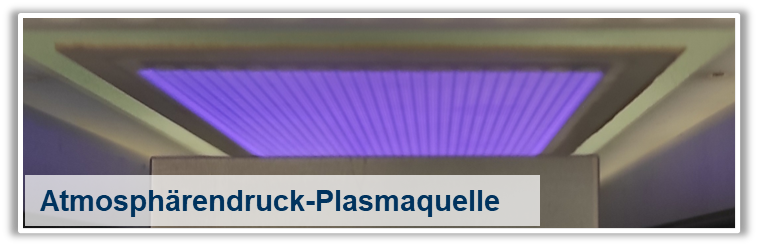
- Handheld and large-area (20 cm × 8 cm) atmospheric-pressure plasma sources for various gases (RPS404, RPS40, RPS30EG)
- Various VUV and UV light sources for surface activation and UV curing of polymers
- Measuring instruments for determining the permeation of oxygen, moisture, and hydrogen
Topics for Doctoral, Master’s, or Bachelor’s Theses
The exposure of molecular precursor films to atmospheric plasma triggers complex reaction cascades that lead to significant chemical and structural changes in the material. In addition to conventional surface activation, this process enables the synthesis of novel inorganic and hybrid functional thin films at low processing temperatures.
Potential research projects focus on the correlation between plasma parameters and the resulting material properties, as well as on identifying potential areas of application. The investigations cover the following areas:
- Process fundamentals: Analysis of the reaction mechanisms during the transition from the molecular precursor to the functional thin film and the influence of atmospheric plasma parameters on conversion reactivity.
- Material characterization: Investigation of the relationship between the chemical composition of the precursors, reactivity during plasma treatment, and the resulting key properties of the film.
- Gas barrier applications: Evaluation of the efficiency of these coatings as gas permeation barriers, e.g., to extend the service life of thin-film photovoltaics (organic) or to reduce hydrogen leakage in lightweight polymer materials.