
Tailored Surfaces
Functional surfaces for biomedicine, analytics, and life sciences applications
This department develops customized surfaces and materials with specifically tunable biological and functional properties. The goal is to design materials that interact specifically with biological systems or can be controlled externally.
The research topics cover the entire spectrum, from material development and functional adaptation to integration into application-oriented systems. This leads to solutions ranging from biomimetic materials and biofunctional surfaces to microfluidic devices.



Development of functional biomaterials and surfaces
Design and control of biological functions
- Design of biocompatible and bioactive materials
- Development of switchable and controllable surface functions
- Combination of experimental methods and modeling
- Understanding of interactions between materials and biological systems
Technologies and methodological approaches
Material development and functional integration
- Electron beam-assisted synthesis of biomimetic and bio-derived materials
- Development of magnetically switchable materials and composite systems
- Fabrication and functionalization of nanoporous materials and nanoparticles
- Development and integration of microfluidic systems and components
Applications in biomedicine and bioanalytics
Use in medical and analytical systems
- Biomaterials for medical and diagnostic applications
- Surfaces for organotypic cell cultures and bioanalytical systems
- Functional materials for sensor technologies and controlled interactions with biological systems
Contribution to innovative life science technologies
Interdisciplinarity and application transfer
- Integrating of materials science, physics, and life sciences
- Development of tailor-made solutions from concept to application level
- Foundations for controllable and functionalized biosurfaces
- Contributions to advances in medicine, diagnostics, and biotechnological applications
Development of functional biomaterials and surfaces
Design and control of biological functions
- Design of biocompatible and bioactive materials
- Development of switchable and controllable surface functions
- Combination of experimental methods and modeling
- Understanding of interactions between materials and biological systems

Gels and Hydrogels
Biomimetic materials with controllable properties for diagnostics and drug testing.
Biofunctional Surfaces and Nanoobjects
Surfaces and nanomaterials for the targeted control of biological processes.

Microsystem Technology for Biomedical Applications
Microfluidic systems for personalized diagnostics and decentralized analysis.
Switchable hydrogels for diagnostics and drug testing
Biomimetic materials with controllable properties
Hydrogels are key materials for modern biomedical applications because they resemble natural tissues in structure and function. However, for many applications this similarity is not sufficient — materials that actively respond to their environment are needed.
Therefore, at the IOM, researchers are developing smart hydrogel systems that respond to external stimuli such as temperature, pH, or magnetic fields and can selectively alter their properties. Combining these hydrogels with nanoparticles or biological components results in hybrid materials with enhanced functionalities.
Result:
- Controllable material properties in real time
- Improved models for drug testing
- Potential to reduce animal testing
Biofunctional surfaces for controlling cell behavior
Tailoring materials specifically to biological systems
The interaction between material surfaces and cells is crucial for many applications in medicine and biotechnology. Conventional materials often offer only limited control options in this regard.
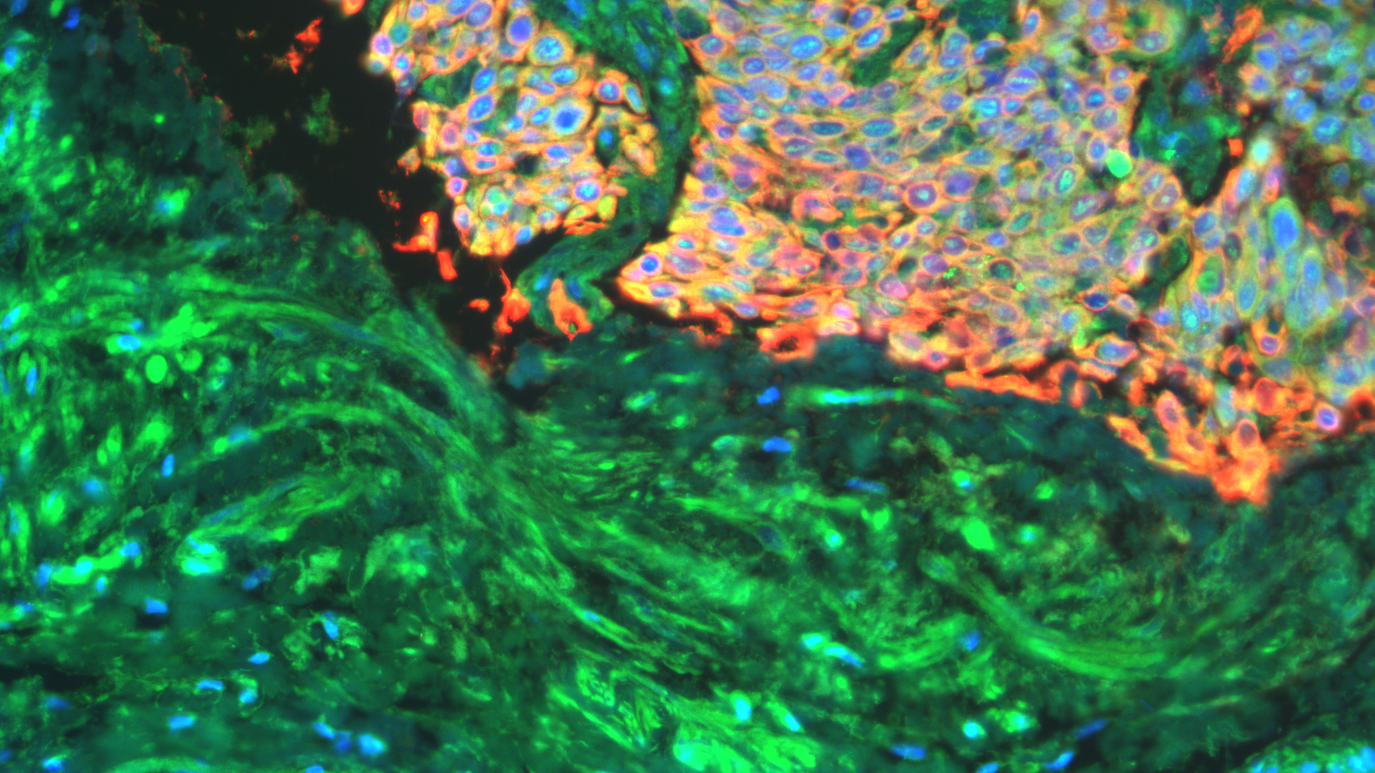
At the IOM, surfaces are specifically functionalized to influence cell adhesion, growth, and differentiation. These include, among others, nanostructured materials, functionalized nanoparticles, and magnetically switchable systems.
Result:
- Targeted control of biological processes
- Improved cell culture systems
- New approaches to diagnostics and therapy
Microfluidic systems for personalized analytics
Miniaturized platforms for decentralized diagnostics
Medical diagnostics is increasingly moving toward decentralized and personalized systems. This requires compact, precisely controllable analysis platforms.
At the IOM, microfluidic systems are being developed in which minute volumes of fluid can be processed and analyzed in a controlled manner. The integration of functionalized materials, sensors, and biological components results in highly integrated lab-on-a-chip systems.
Result:
- Precise analysis in compact formats
- Rapid and decentralized diagnostics
- Foundation for personalized medical applications