Tailored Surfaces
Functional membranes for water treatment and resource conservation
This research area develops innovative membrane technologies for water treatment, thereby contributing to sustainable infrastructure and resource conservation. The focus is on solutions for removing pollutants and for the efficient use and recovery of resources.
The research topics cover the entire value chain—from the development of sustainable membrane materials through their functional modification to their integration into application-oriented systems.


Development of sustainable membrane materials
Materials and membrane preparation processes
- Polymer-based membranes for efficient and selective separation of substances
- Use of sustainable materials and green solvents
- Production of various membrane geometries, e.g., through phase separation
- Development of alternatives to fluorinated polymers and toxic processes
Functionalization and smart membrane systems
Surface modification and adaptive functions
- Electron beam modification for hydrophilization and functionalization
- Immobilization of biomolecules, enzymes, and catalysts
- Development of stimulus-responsive membranes (e.g., temperature- or pH-controlled)
- Integration of photocatalytic and adsorptive functions
From material development to application
Scaling and transfer
- Investigation of transport, separation, and reaction mechanisms
- Development from laboratory to pilot scale
- Scalable technologies for industrial applications
- Collaboration with academic and industrial partners
Applications in water treatment and resource recovery
Removal of contaminants and recovery of resources
- Removal of micropollutants (e.g., PFAS, hormones, pharmaceutical residues)
- Removal of micro- and nanoplastics from contaminated solutions
- Use of membrane bioreactors for the recovery of valuable substances (e.g., proteins)
- Contribution to increased efficiency and sustainability in water treatment
Contribution to sustainable environmental technologies
Impact and societal relevance
- Contribution to clean water and resource conservation
- Support for national and international sustainability goals, e.g., for the circular economy
- Development of practical and industrially viable solutions
- Strengthening innovation in the field of environmental technologies
Development of sustainable membrane materials
Materials and membrane preparation processes
- Polymer-based membranes for efficient and selective separation of substances
- Use of sustainable materials and green solvents
- Production of various membrane geometries, e.g., through phase separation
- Development of alternatives to fluorinated polymers and toxic processes
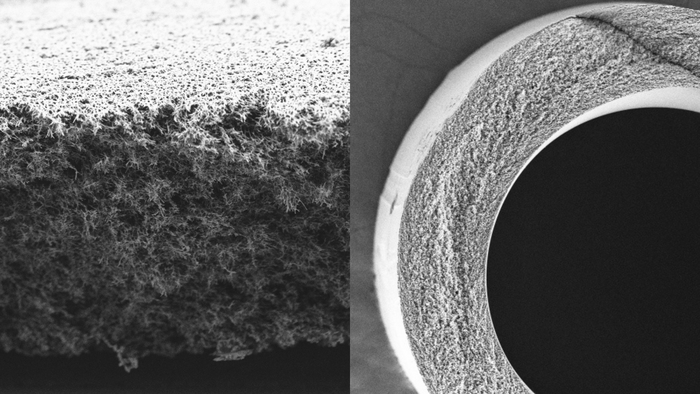
Irradiation-initiated Modification Reactions
Tailoring membrane properties—from hydrophilicity to chemical stability.

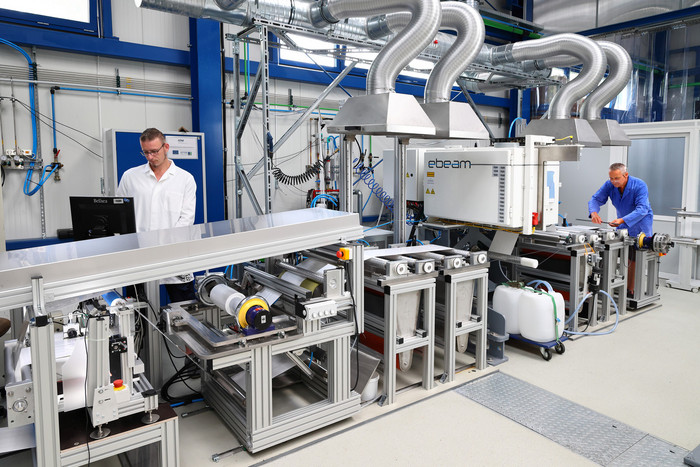
Implementation in Real-world Water Treatment Applications
Membrane systems for removing contaminants from water.
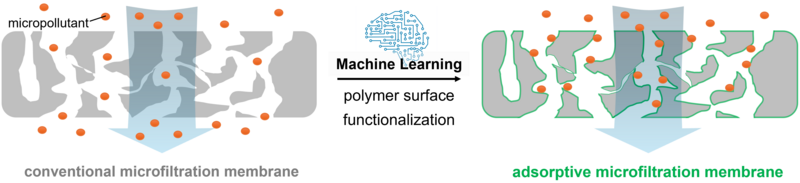
AI-supported development of functionalized membranes
Targeted binding of pollutants instead of trial and error
The functionalization of polymer membranes opens up new possibilities for the targeted removal of pollutants from water. The challenge lies in selecting the most effective method from a wide range of possible chemical modifications.
At the IOM, a data-driven approach is being pursued for this purpose: A machine learning model combines quantum chemical data with experimental process parameters to predict optimal functionalization strategies. The work is being conducted in close collaboration with the Modeling and Simulation cross-disciplinary unit.
Result:
- Significantly more efficient development of new membrane materials
- Targeted selection of optimal functionalizations
- Accelerated material development through AI
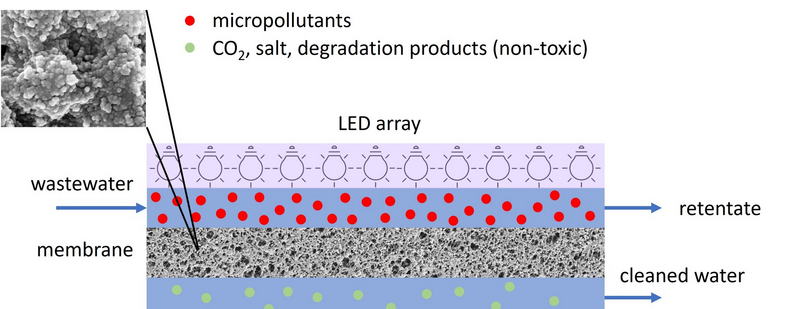
PFAS removal via UV catalysis
Targeted degradation of persistent pollutants
Per- and polyfluoroalkyl substances (PFAS) are among the most problematic contaminants in water, as they are extremely stable and difficult to degrade. As the demand for safe water reuse increases, reliable treatment processes are needed to remove or degrade such persistent contaminants.
At the IOM, innovative UV-catalyzed processes are being developed in collaboration with partners to reliably degrade PFAS and other micropollutants. The goal is to treat water so that it can be reused even for demanding applications—such as in agriculture.
Result:
- Effective degradation of highly persistent pollutants
- Foundation for safe water reuse
- Contribution to sustainable water cycles
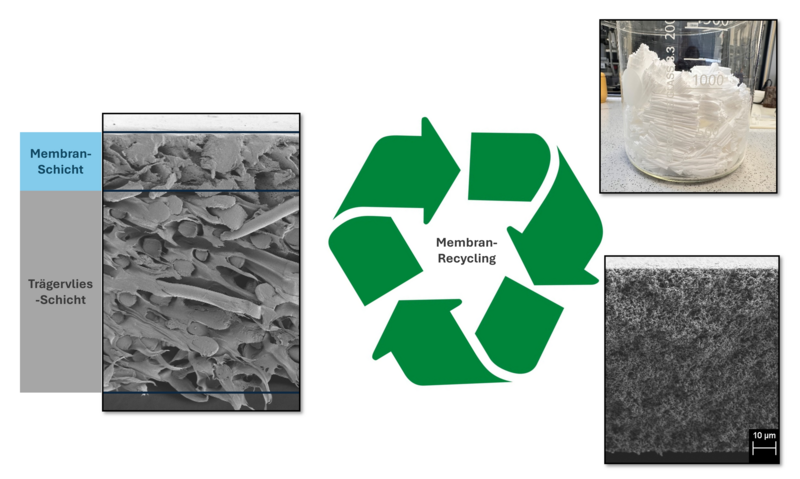
Recycling of membrane materials
Circular economy for high-performance membranes
Membrane filters are key components of modern water treatment, but their production is resource-intensive. Recovering membrane materials at the end of their service life can therefore reduce waste and support a more circular use of high-performance filtration materials.
Together with collaboration partners, new processes are being developed to disassemble membrane modules into their constituent parts, process them, and reuse them in the preparation of high-performance membranes.
At the IOM, the focus is on developing suitable separation and cleaning processes for recovering membrane materials and on preparing and modifying new membranes from the recycled materials. In addition, AI-supported methods and environmental assessments are used to develop sustainable and economically viable solutions.
Result:
- Recycling of high-quality membrane materials
- Reduction of resource use and waste generation
- Foundation for sustainable membrane production