Tailored Surfaces
Functional coatings for protection, efficiency, and durability
This research area develops functional coatings that specifically protect materials and enhance their properties. The focus is on plasma- and beam-assisted coating techniques that enable the production of high-quality coatings even on temperature-sensitive materials and components.
Together, the research groups cover the entire spectrum from the analysis and understanding of coating methods, through the targeted design of functional coatings, to their fabrication, characterization, and transfer into application-oriented technologies.



Coating development and deposition technologies
Plasma- and beam-assisted processes
- Plasma- and beam-assisted processes for vapor deposition and wet chemical coating (plasma engineering and photoconversion)
- Deposition of dense, high-quality films at low process temperatures
- Particularly suitable for sensitive substrates such as polymers and complex layered systems
- Investigation of plasma and photon interactions with surfaces in coating processes
Development from the process control to the application
From understanding to coating design
- Correlation of Process Parameters and Coating Properties
- Knowledge-based design of coating systems for specific applications
- Validation in real-world scenarios
- Transfer to the practical application in collaboration with industry partners
Applications in energy, mobility, and packaging
Protection and functionalization of technical systems
- Gas barrier layers for the protection of sensitive materials and components
- Compartmentalization of technical gases and encapsulation of electronic and optoelectronic components
- Contributing to the service life, efficiency, and safety of modern technologies
- Key technology for a resource-efficient economy
Contribution to sustainable and high-performance technologies
Efficiency, material protection, and scalability
- Material and energy efficiency even at low temperatures
- Functional coatings for complex and sensitive substrates
- Combination of fundamental understanding and application-oriented development
- Relevance to energy, mobility, electronics, and sustainable technologies
Coating development and deposition technologies
Plasma- and beam-assisted processes
- Plasma- and beam-assisted processes for vapor deposition and wet chemical coating (plasma engineering and photoconversion)
- Deposition of dense, high-quality films at low process temperatures
- Particularly suitable for sensitive substrates such as polymers and complex layered systems
- Investigation of plasma and photon interactions with surfaces in coating processes
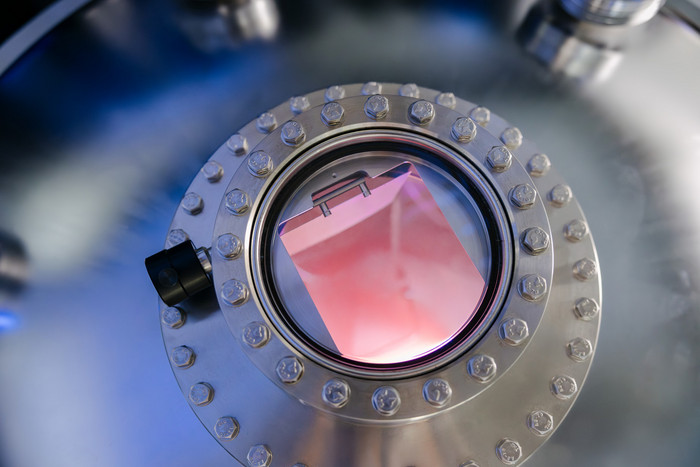
Plasma Engineering — Knowledge-based Film Design with Vacuum Plasmas
Plasma diagnostics and materials science go hand in hand - for the targeted development of thin films for energy, electronics, and barrier technologies.
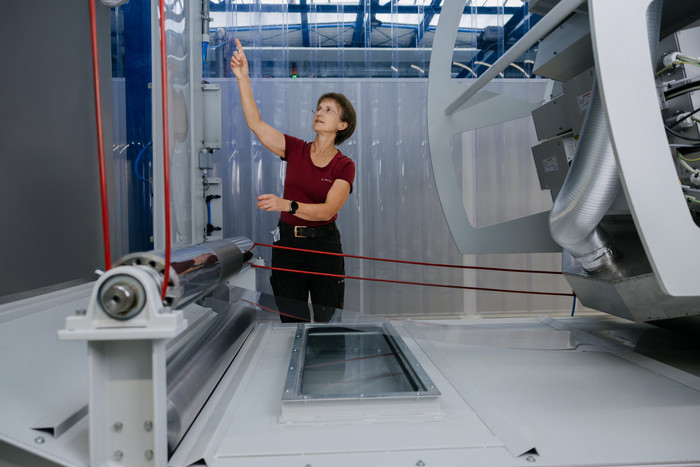
Knowledge-based Coating Design with Photons at Atmospheric Pressure
Photon-based coating process at low temperatures—ideal for sensitive materials. Industry-relevant.
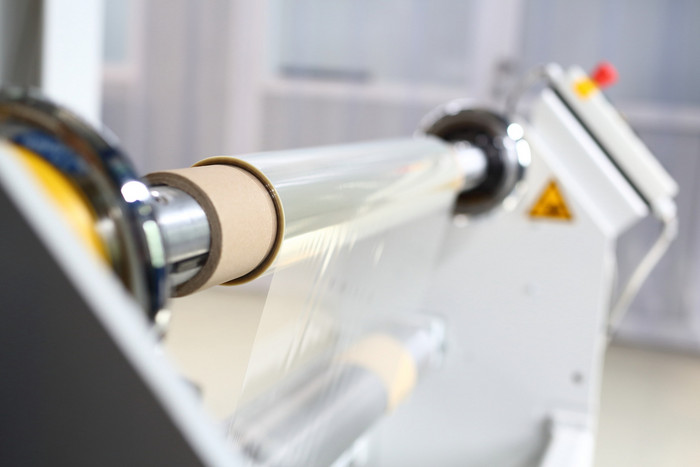
Layer Conversion with Atmospheric Plasmas
Functional coatings under ambient conditions — reactive and scalable.
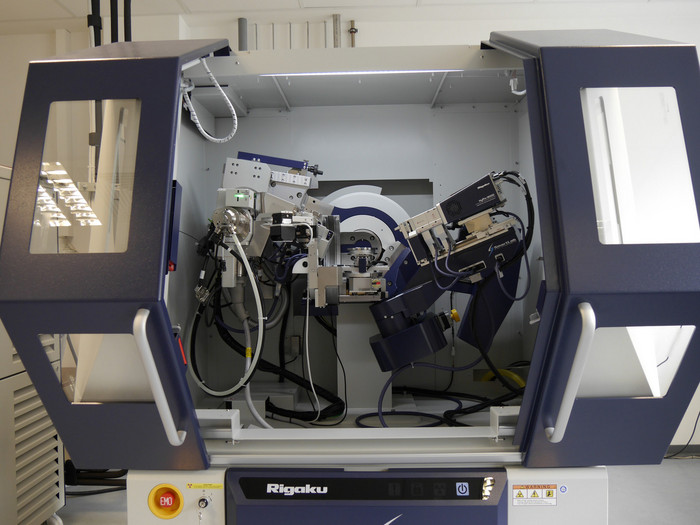
Structural and Functional Film Characterization
Analyzing and understanding material properties—from structure to application.
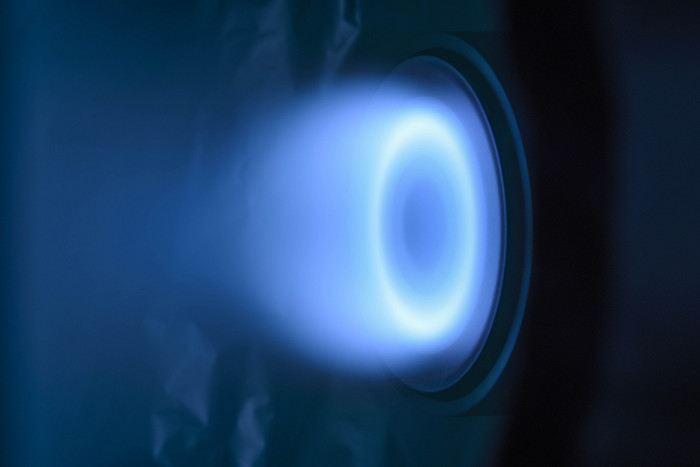
Plasma Diagnostics for Thin-Film Design
Understanding and precisely controlling plasmas - the basis for reproducible film deposition.
Hydrogen barrier layers for energy applications
Protection of materials for hydrogen storage and transport
As the hydrogen economy expands, the demand for materials that reliably prevent hydrogen permeation is increasing. Polymer-based systems, in particular, are reaching their limits in this regard.
At the IOM, plasma- and photon-based processes are therefore being developed to selectively produce dense inorganic and hybrid barrier layers at low temperatures. The research systematically investigates how structure and composition of the layers influence their permeation properties.
The goal is to gain a fundamental understanding of the structure-property relationships in order to design barrier layers specifically for concrete applications.
Result:
- Significantly reduced gas permeation
- Improved material design for hydrogen systems
- Basis for safe storage and transport
Long-term stability of barrier layers
Understanding aging processes and enhancing material reliability
Barrier layers in applications such as hydrogen technology or photovoltaics must remain stable over long periods of time—even under mechanical and chemical stress.
At the IOM, barrier layer materials are therefore subjected to accelerated aging processes, and their long-term stability is specifically investigated in dependence on the conditions under which the layers were produced. The focus is on complex polymeric layer systems whose structure changes under stress, thereby affecting their function.
By combining specific stress tests with analysis methods, process-material relationships that are critical to service life are identified.
Result:
- Understanding of aging mechanisms
- Targeted optimization of long-term stability
- Higher reliability in real-world applications
Energy-efficient plasma-assisted thin film deposition
Producing high-quality films at low temperatures
Many modern materials and substrates - especially functional coating systems - are temperature-sensitive and can only be coated under limited conditions. At the same time, conventional processes consume a large amount of energy.
At the IOM, coating processes are being further developed to deposit films at significantly reduced temperatures. Plasma engineering involves combining plasma diagnostic methods with expertise in materials science. The process utilizes atomic-scale heating, in which the energy of the film-forming particles is specifically ultilizied during the film growth process, rather than heating the entire substrate.
This enables the group to produce high-quality films even on sensitive materials while simultaneously saving energy.
Result:
- Reduced process and substrate temperatures
- Increasingly energy-efficient coating processes
- New possibilities for film growth on temperature-sensitive materials