Tailored Surfaces
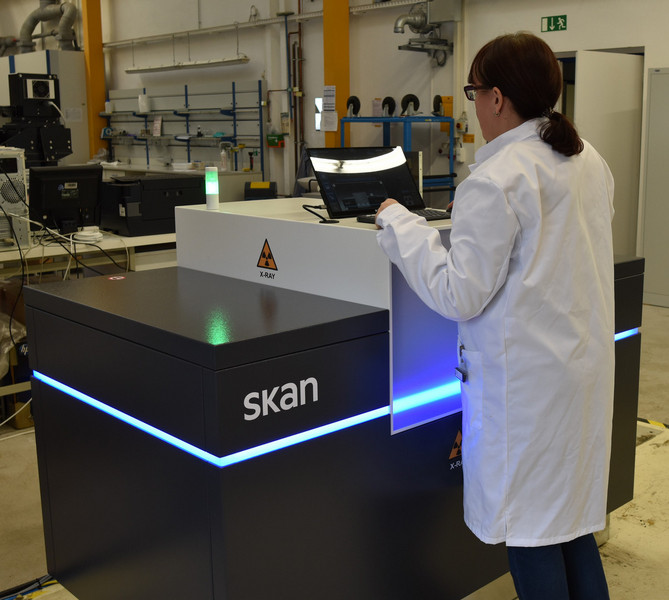
Tailoring membrane properties using radiation-based methods
We develop methods for the targeted modification of polymer membranes. The aim is to introduce durable functional properties into existing materials and tailor their properties to specific applications.
Radiation-based modification technologies
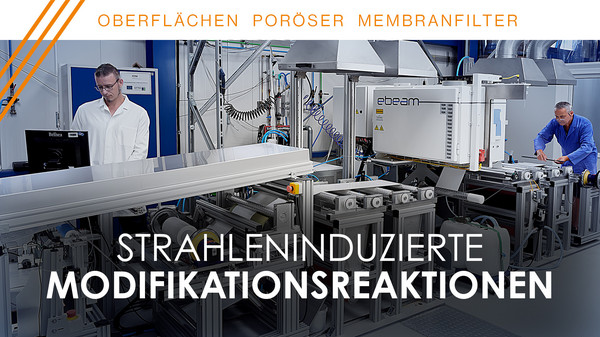
- Use of electron beams (160 keV to 12 MeV)
- Use of UV radiation (e.g., Hg and excimer lamps)
- Plasma treatment (low pressure and atmospheric pressure)
Targeted tailoring of functional membrane properties
- Functionalization and hydrophilization of membrane surfaces
- Improvement of biocompatibility
- Crosslinking and stabilization of polymer structures
- Increasing chemical and mechanical resistance (e.g., resistance to solvents or chlorine)
Material diversity and adaptability
- Modification of a wide range of membrane polymers (e.g., PES, PVDF, PAN, PA, PE, PET)
- Tailoring the properties of existing materials to specific application requirements
- Development of long-lasting, permanently stable functionalizations
Development of functional membrane systems
- Upgrading standard membranes into application-specific high-performance materials
- Tailoring separation and filtration properties to specific application requirements
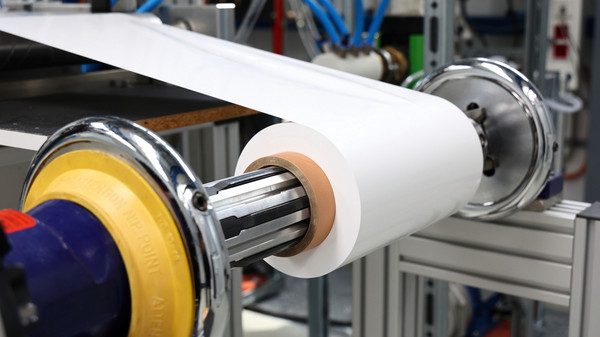
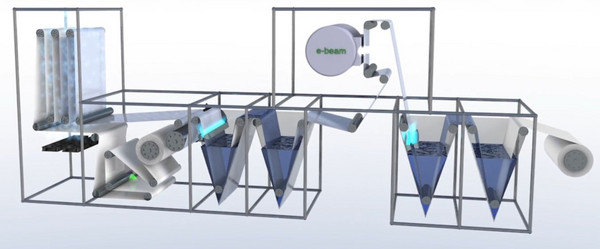
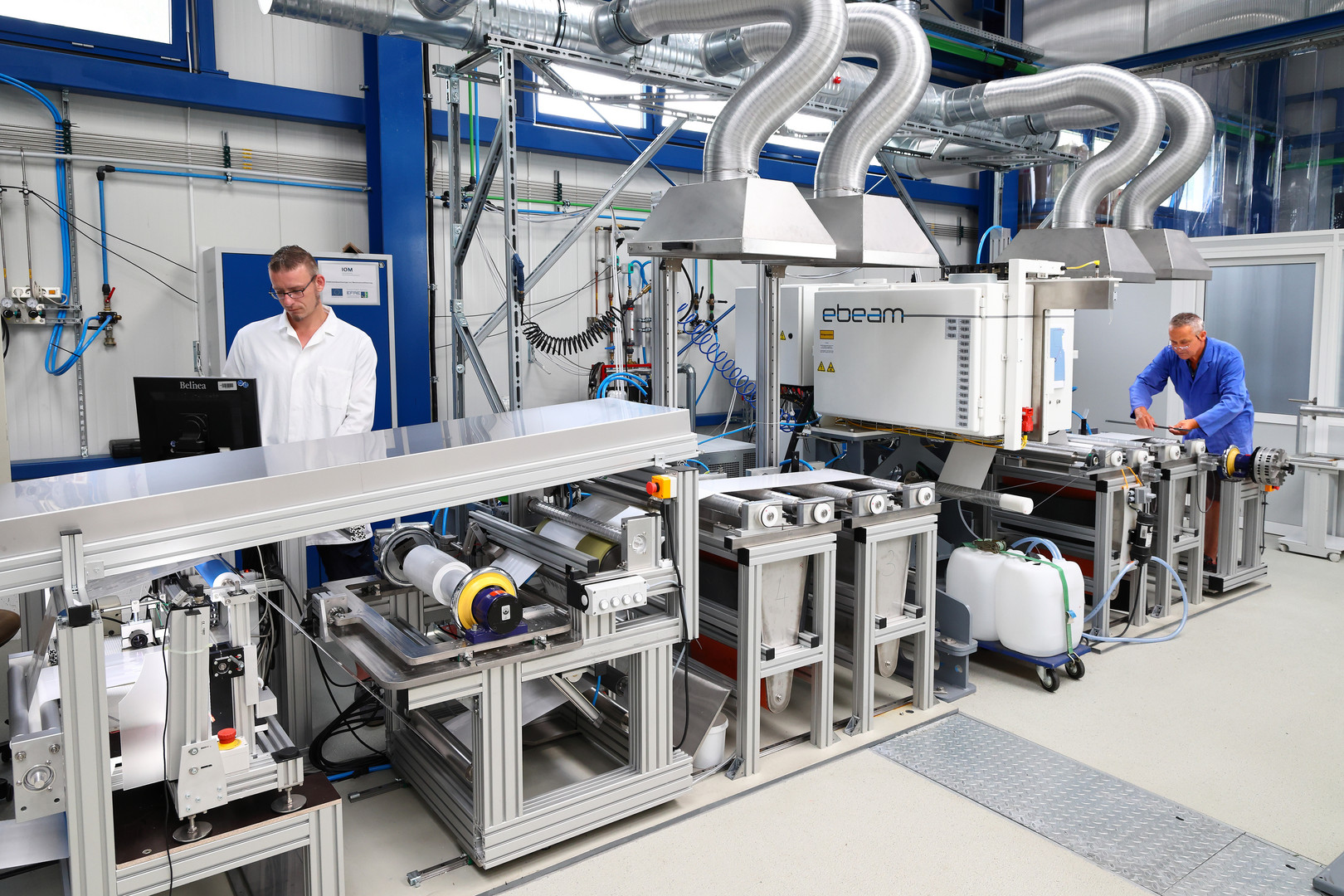
- Integration of membrane modification processes into scalable workflows, including continuous roll-to-roll
Projects
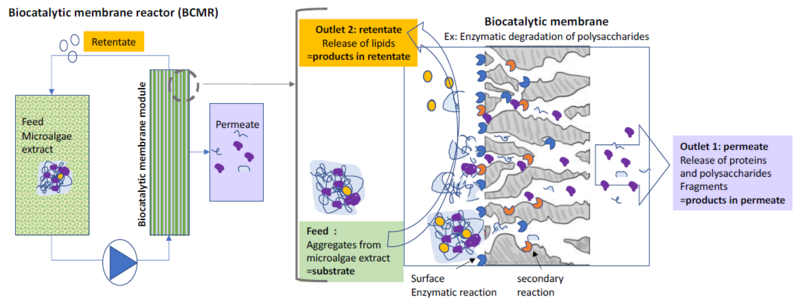
Intensified process coupling reaction with separation using enzyme-functionalized membranes for the recovery of biomolecules from microalgae
The aim of the PREMIUM project is to develop a biocatalytic membrane reactor for an efficient recovery of valuable biomolecules from microalgae. PREMIUM focuses on process intensification and relies on a multidisciplinary approach:
1) process and bioprocess engineering, including the biomass pretreatment, the development and modeling of a new reactor coupling enzymatic reaction and membrane filtration;
2) polymer sciences including the development of tailored membranes and their enzyme functionalization by electron-beam treatment;
3) Materials characterization, including the development of tailored cryo-electron microscopy methods to analyze enzyme localization, immobilization yields, and the effects of enzyme functionalization on membrane fouling. These insights provide a basis for process development and modeling.
Funded by the DFG
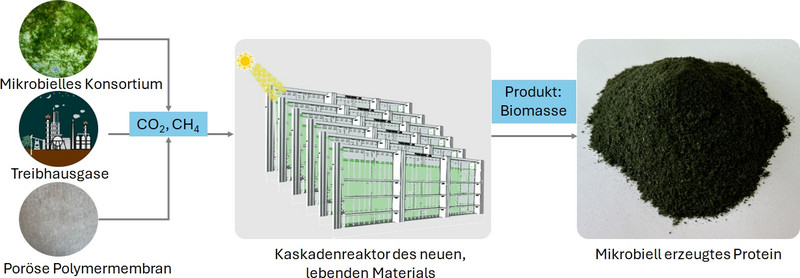
Recycling plastic and developing hybrid living materials by capturing greenhouse gases to produce value-added products
Climate change, plastic pollution, and the need for sustainable protein sources pose major challenges for Europe and beyond. The REPLACER project addresses these challenges by combining biological systems with polymer-based materials to develop hybrid living materials (HLMs). These materials are intended to capture and convert greenhouse gases into microbial protein for animal feed. Key objectives of the REPLACER project include a new concept for carbon capture and utilization, HLM-based bioreactor prototypes made from recycled PET, and producing microbial proteins from greenhouse gases as a basis for animal feed by the HLMs. The commercialization of this concept will contribute to:
1) capturing greenhouse gases and supporting the EU’s goals for reducing greenhouse gas emissions;
2) recycling plastics and supporting the European Green Deal and the Circular Economy Action Plan;
3) producing microbial proteins and reducing the EU’s dependence on soy protein imports.
Funded by Sächsische Aufbaubank – SAB/ERDF

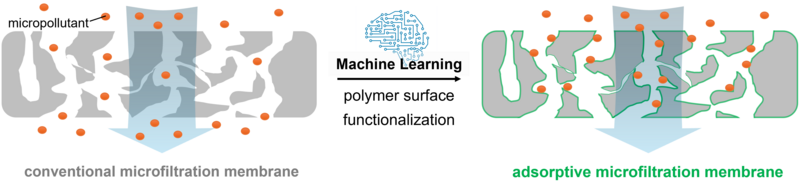
Machine Learning-Assisted Membrane Design for the Efficient Removal of Molecular Contaminants from Wastewater
By using a modern electron beam-based approach, virtually any molecular compound can be immobilized on polymer membranes. The challenge now is to select the most effective functionalization strategy for removing toxic pollutants from water via adsorption. To solve this problem, a machine learning model is being developed that uses quantum chemical data to predict optimal functionalization strategies, incorporating process parameters from electron beam treatment and adsorption studies.
Funded by DFG
Intensified process coupling reaction with separation using enzyme-functionalized membranes for the recovery of biomolecules from microalgae
The aim of the PREMIUM project is to develop a biocatalytic membrane reactor for an efficient recovery of valuable biomolecules from microalgae. PREMIUM focuses on process intensification and relies on a multidisciplinary approach:
1) process and bioprocess engineering, including the biomass pretreatment, the development and modeling of a new reactor coupling enzymatic reaction and membrane filtration;
2) polymer sciences including the development of tailored membranes and their enzyme functionalization by electron-beam treatment;
3) Materials characterization, including the development of tailored cryo-electron microscopy methods to analyze enzyme localization, immobilization yields, and the effects of enzyme functionalization on membrane fouling. These insights provide a basis for process development and modeling.
Funded by the DFG
Publikation highlights
T. Schreiber, M. Schmidt, A. Prager, A. Poidevin, E. Couallier, A. Schulze
Enzyme-grafted nylon membranes for sequential filtration of Tetraselmis chui extract with enhanced protein recovery
Sep. Purif. Technol. (2025), https://doi.org/10.1016/j.seppur.2025.133131
Microalgae are considered a promising and sustainable source of valuable biomolecules such as proteins. Extraction of proteins from microalgae suspensions by membrane technology is still limited by fouling and inefficient recovery due to the complex mixture of biomolecules. In this work an enzyme-modified nylon microfiltration membrane was prepared to efficiently recover proteins from an extract of the microalgae Tetraselmis chui using a simple sequential filtration setup. A mixture of hydrolytic enzymes, trypsin and a lipase, was successfully grafted onto flat-sheet membranes using an electron beam-based approach. It was shown that for generating high lipase activity, co-immobilization with trypsin or another protein is beneficial. A design of experiments approach was used to determine the effect size of selected parameters for the sequential filtration process. Derived empirical models were used for optimization and confirmed by experiments resulting in protein recovery within the filtrate of up to 1.4 g/L marking a significant increase compared to 0.8 g/L with the commercial reference membrane. Furthermore, up to 40 % of the total protein content from the microalgae dry matter could be recovered, compared to 24 % with the reference membrane. The sequential filtration was found to be advantageous compared to direct filtration allowing a combination of both enzymatic incubation and filtration. Various characterization methods were performed showing that the enzyme grafting layer reduces fouling.
M. Schmidt, A. Prager, N. Schönherr, R. Gläser, A. Schulze
Reagent-Free Immobilization of Industrial Lipases to Develop Lipolytic Membranes with Self-Cleaning Surfaces
Membranes (2022), https://doi.org/10.3390/membranes12060599
Biocatalytic membrane reactors combine the highly efficient biotransformation capability of enzymes with the selective filtration performance of membrane filters. Common strategies to immobilize enzymes on polymeric membranes are based on chemical coupling reactions. Still, they are associated with drawbacks such as long reaction times, high costs, and the use of potentially toxic or hazardous reagents. In this study, a reagent-free immobilization method based on electron beam irradiation was investigated, which allows much faster, cleaner, and cheaper fabrication of enzyme membrane reactors. Two industrial lipase enzymes were coupled onto a polyvinylidene fluoride (PVDF) flat sheet membrane to create self-cleaning surfaces. The response surface methodology (RSM) in the design-of-experiments approach was applied to investigate the effects of three numerical factors on enzyme activity, yielding a maximum activity of 823 ± 118 U m−2 (enzyme concentration: 8.4 g L−1, impregnation time: 5 min, irradiation dose: 80 kGy). The lipolytic membranes were used in fouling tests with olive oil (1 g L−1 in 2 mM sodium dodecyl sulfate), resulting in 100% regeneration of filtration performance after 3 h of self-cleaning in an aqueous buffer (pH 8, 37 °C). Reusability with three consecutive cycles demonstrates regeneration of 95%. Comprehensive membrane characterization was performed by determining enzyme kinetic parameters, permeance monitoring, X-ray photoelectron spectroscopy, FTIR spectroscopy, scanning electron microscopy, and zeta potential, as well as water contact angle measurements.
Z. Niavarani, D. Breite, B. Ulutaş, A. Prager, Ö. Kantoğlu, B. Abel, R. Gläser, A. Schulze
Enhanced EDC Removal from Water through Electron Beam-Mediated Adsorber Particle Integration in Microfiltration Membranes
RSC Advances (2023), https://doi.org/10.1039/D3RA06345C
The existence of endocrine disrupting chemicals (EDCs) in water and wastewater gives rise to significant environmental concerns. Conventional treatment approaches demonstrate limited capacity for EDC removal. Thus, incorporation of advanced separation procedures becomes essential to enhance the efficiency of EDC removal. In this work, adsorber composite microfiltration polyethersulfone membranes embedded with divinyl benzene polymer particles were created. These membranes were designed for effectively removing a variety of EDCs from water. The adsorber particles were synthesized using precipitation polymerization. Subsequently, they were integrated into the membrane scaffold through a phase inversion process. The technique of electron beam irradiation was applied for the covalent immobilization of particles within the membrane scaffold. Standard characterization procedures were carried out (i.e., water permeance, contact angle, X-ray photoelectron spectroscopy and scanning electron microscopy) to gain a deep understanding of the synthesized membrane properties. Dynamic adsorption experiments demonstrated the excellent capability of the synthesized composite membranes to effectively remove EDCs from water. Particularly, among the various target molecules examined, testosterone stands out with the most remarkable enhancement, presenting an adsorption loading of 220 mg m−2. This is an impressive 26-fold increase in the adsorption when compared to the performance of the pristine membrane. Similarly, androst-4-ene-3,17-dione exhibited an 18-fold improvement in adsorption capacity in comparison to the pristine membrane. The composite membranes also exhibited significant adsorption capacities for other key compounds, including 17β-estradiol, equilin, and bisphenol-A. With the implementation of an effective regeneration procedure, the composite membranes were put to use for adsorption over three consecutive cycles without any decline in their adsorption capacity.
T.Ş. Raman, C. Claus, B. Abel, A. Schulze
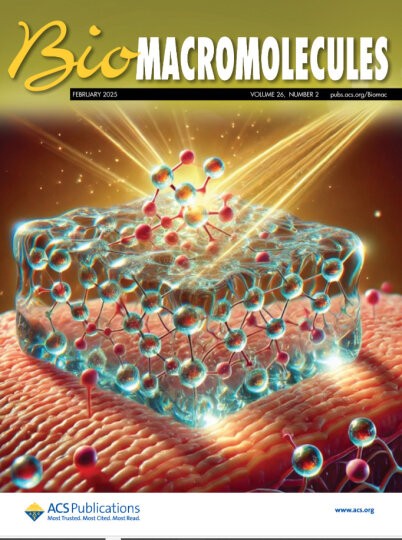
Study of the influence of structural and chemical properties of electron beam-polymerized PEGDA/gelatin hybrid hydrogels on the uptake and release dynamics of different photosensitizer molecules
Biomacromolecules (2025), https://doi.org/10.1021/acs.biomac.4c00982
Hybrid hydrogels are promising for wound dressing, tissue engineering, and drug delivery due to their exceptional biocompatibility and mechanical stability. This study synthesized hybrid hydrogels for photodynamic therapy using electron beam-initiated polymerization with varying PEGDA/gelatin ratios and irradiation doses to evaluate their effectiveness as uptake and release systems for five photosensitizers. Toluidine blue, O (TBO); methylene blue (MB); eosin, Y; indocyanine, green; and sodium meso-tetraphenylporphine-4,4′,4″,4‴-tetrasulfonate were studied for their uptake and release dynamics in relation to their structural properties and the hydrogels’ composition. Uptake was influenced by the gelatin ratio and ionic properties, with anionic photosensitizers achieving over 80% uptake while cationic ones remained below 45%. Increased irradiation doses highlighted the roles of ionic interactions, hydrophilicity, and surface polarity. Cationic photosensitizers produced singlet oxygen 9–10 times more efficiently. Nontoxic PEGDA/gelatin hydrogels demonstrated photosensitizer-dependent cytotoxicity, with TBO and MB consistent with previous findings. These results confirm their potential in photodynamic therapy.
Z. Niavarani, D. Breite, M. Yasir, V. Sedlarik, A. Prager, N. Schönherr, B. Abel, R. Gläser, A. Schulze
Removal of endocrine disrupting chemicals from water through urethane functionalization of microfiltration membranes via electron beam irradiation
Front. Environ. Sci. Eng. (2024), https://doi.org/10.1007/s11783-024-1805-6
Polyethersulphone (PES) membranes modified with urethane functional groups were prepared through an interfacial reaction using electron beam irradiation. The removal of eight endocrine disrupting chemicals (EDCs) was studied using both pristine and functionalized PES membranes. The prepared membranes underwent characterization using several techniques, including attenuated total reflectance-Fourier transform infrared (ATR-FTIR) spectroscopy, scanning electron microscopy, contact angle analysis, and measurements of pure water flux. Furthermore, dynamic adsorption experiments were conducted to evaluate the adsorption mechanism of the prepared membrane toward the eight EDCs. The urethane functionalized membranes were hydrophilic (52° contact angle) and maintained a high permeate flux (26000 L/h m2 bar) throughout the filtration process. Dynamic adsorption results demonstrated that the introduction of urethane functional groups on the membranes significantly enhanced the removal efficiency of 17β-estradiol, estriol, bisphenol A, estrone, ethinylestradiol, and equilin. The adsorption loading of 17β-estradiol on the functionalized PES membrane was 6.7 ± 0.7 mg/m2, exhibiting a 5-fold increase compared to the unmodified PES membrane. The membranes were successfully regenerated and reused for three adsorption cycles without experiencing any loss of adsorption capacity.
Equipment
- Modification of porous polymer membranes for nano-, ultra-, and microfiltration (with/without nonwoven fabric)
- Modification of hollow fiber and flat-sheet filter membranes
- Analytics:
- Permeance (dead-end, cross-flow)
- Bubble point, MWCO, sieve curve analysis, Hg porosimetry, porometry
- Contact angle, surface energy
- Zeta potential, surface charge density
- Protein adsorption (BCA test)
- Fouling (proteins, algae, wastewater, surface water, etc.)
- Toxicity (luminescent bacteria)
- Enzyme activities (various enzymes)
- Photocatalytic activity (static and continuous operating mode)
- Adsorption of micropollutants
- SEM, TEM, AFM
- Tensile test, DMA
- TOC, ICP-OES, SPME-GC/MS
- IR, Raman, UV/VIS
Video