Tailored Surfaces
Understanding material properties and utilizing them specifically for applications
Analytical foundations are being established for the development of functional coating systems. Through comprehensive characterization, the structure, composition, and properties of thin films can be determined across all relevant scales and correlated with one another.
Analysis of structure, composition, and properties
- Investigation of the structure, texture, and morphology of thin films
- Determination of film thickness, density, and surface and interfacial roughness
- Depth-resolved analysis of chemical composition
- Correlation of material structure and functional properties
Analytical methods and measurement techniques
- X-ray analytical methods (XRD, XRR)
- Spectroscopic methods (XPS, ToF-SIMS, UV-Vis, ellipsometry)
- Microscopy (optical microscopy, SEM/EDX)
- Interferometry and other methods for determining film thickness
Functional tests and application-oriented characterization
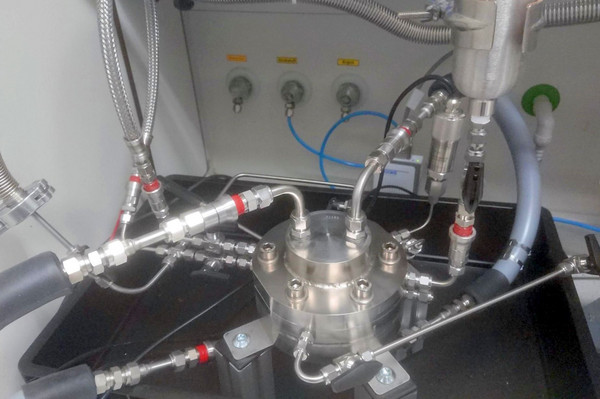
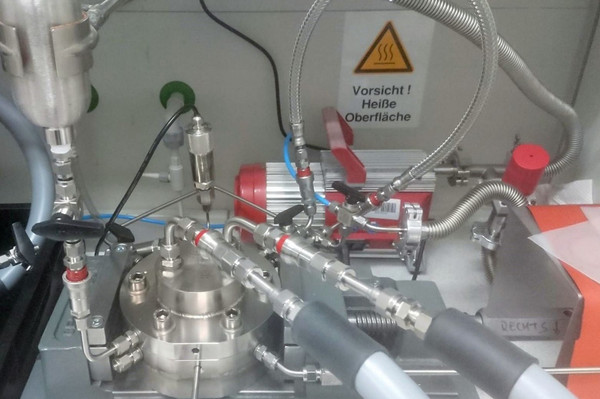
- Gas permeation measurements (e.g., O₂, H₂O, H₂, CO₂, He, even under mechanical stress)
- Testing of adhesion, abrasion resistance, and chemical resistance
- Determination of mechanical properties such as hardness and elastic modulus
- Analysis of optical properties such as transmission and reflection
Contribution to the development of functional coating systems
- Correlation of material structure, process parameters, and functionality
- Basis for the optimization and validation of coating processes
- Support for all research groups in targeted material development
- Contribution to the transfer of coating systems into application-relevant technologies
Projects
Accelerator – Accelerated aging of complex polymeric barrier materials for the energy sector
Complex polymer materials used in lightweight components for the hydrogen economy or photovoltaics must often withstand demanding physical stresses in addition to the required chemical stability. One example is gas barrier coatings, which can be deposited even on thermally sensitive substrates using light-driven coating technologies. The goal of the project is to better understand which structural properties of these materials enable them to be used safely over long periods of time. Gas barrier layers will be deposited on polymer and metallic substrates using UV-assisted coating processes and specifically exposed to application-relevant aging scenarios. The structural and chemical analysis of the material changes is intended to generate insights into material-structure relationships that can also be utilized by companies in Saxony’s economy. As a prerequisite for such investigations, experimental setups and methods for targeted material aging will be established and used to study coating systems.
Funded by EFRE/JTF 2021–2027 from the Free State of Saxony (SAB) with EU co-financing

House of Oxides – Coordination clusters with octahedral geometry as the basis for highly ordered mixed-metal oxide layers with pronounced memristive properties
Transition-metal oxide layers play a central role in the fabrication of memristic data storage devices, in which changes in electrical conductivity (e.g., due to local valence changes in the metal centers) are utilized to store information when external potentials are applied. These memory devices are characterized by high energy efficiency, scalability, and durability, making them a promising alternative to conventional charge-based memory in many fields. To optimize switching properties, mixed metal oxides - typically generated via sputtering, PLD, or ALD processes - are increasingly being investigated. Aside from the high energy consumption of these high-temperature processes, these methods often result in an uneven distribution of the various metal species and their oxide phases within the layers. As part of the “House-of-Oxides” project, we present an alternative route to such technically interesting, multimetallic oxide layers, based on the thermally or photochemically induced conversion of organically functionalized, hexanuclear transition-metal oxo-clusters as neutral congeners of anionic Lindqvist-like polyoxometalates. To this end, Zr₆- and Ce₆-oxo-clusters are first synthesized as precursors containing various 3d-, 4f-, alkali, and/or alkaline earth metals and deposited onto various metallic and nonmetallic surfaces. The unambiguous stoichiometry of the multinuclear coordination compounds ensures optimal mixing of the various metal types . Subsequently, the organic components of the precursors are removed by thermal treatment or irradiation with high-energy photons, resulting in phase-pure mixed metal oxide layers. Both the synthesis and the oxide formation are low-temperature processes (up to a maximum of 300°C), which exhibit a significantly improved energy balance compared to conventional processes, which typically take place within a temperature range of 800 to 1200°C. The choice of zirconium- and cerium-based oxo-clusters over the more technically common hafnium and titanium was made due to the higher stability of the oxide phases, coupled with comparable switching properties and cost advantages. However, because of their chemical similarity, it is in principle possible to adapt the method to complexes containing these metals.
Funded by the German Research Foundation (DFG)
Accelerator – Accelerated aging of complex polymeric barrier materials for the energy sector
Complex polymer materials used in lightweight components for the hydrogen economy or photovoltaics must often withstand demanding physical stresses in addition to the required chemical stability. One example is gas barrier coatings, which can be deposited even on thermally sensitive substrates using light-driven coating technologies. The goal of the project is to better understand which structural properties of these materials enable them to be used safely over long periods of time. Gas barrier layers will be deposited on polymer and metallic substrates using UV-assisted coating processes and specifically exposed to application-relevant aging scenarios. The structural and chemical analysis of the material changes is intended to generate insights into material-structure relationships that can also be utilized by companies in Saxony’s economy. As a prerequisite for such investigations, experimental setups and methods for targeted material aging will be established and used to study coating systems.
Funded by EFRE/JTF 2021–2027 from the Free State of Saxony (SAB) with EU co-financing
Publication highlights
P.C. With, T. Pröhl, J.W. Gerlach, A. Prager, A. Konrad, F. Arena, U. Helmstedt
Hydrogen permeation through uniaxially strained SiOx barrier thin films photochemically prepared on PET foil substrates
Int. J. Hydrogen Energy 81 (2024) 405-410, https://doi.org/10.1016/j.ijhydene.2024.07.249
Hydrogen permeation through strained thin SiOx gas barrier films - formed at room temperature and ambient pressure via UV photochemical conversion (photoconversion) on PET film substrates - was investigated using a specialized measurement system. The hydrogen permeation measurements were performed as a function of the number of laminated individual SiOx barrier films, the sample temperature, and the mechanical stress applied to the samples. The results show a significant overall improvement in hydrogen barrier properties for both individual SiOx barrier films on PET and laminated individual SiOx barrier films on PET. In stressed samples, the hydrogen barrier properties deteriorate due to stress-induced cracking in the barrier films. This deterioration is most pronounced in stressed individual SiOx barrier films; however, it can be significantly reduced by laminating individual SiOx barrier films.
E. Thelander, I. Hilmi, U. Ross, J.W. Gerlach, A. Lotnyk, B. Rauschenbach
Epitaxial growth of Ge2Sb2Te5 thin films on BaF2 substrates at room temperature by pulsed laser deposition
J. Vac. Sci. Technol. A 43 (2025) 063403, https://doi.org/10.1116/6.0004791
Epitaxial Ge2Sb2Te5 (GST225) thin films, key materials for phase-change memory devices, were successfully grown at room temperature using pulsed laser deposition on the (111) surface of BaF2 single-crystal substrates. The laser fluence and repetition rate played a decisive role in controlling the microstructure of the thin films. Epitaxial growth was achieved at fluences between 2 and 4 J cm−2with a low repetition rate of 1 Hz. In contrast, a fluence of 1 J cm−2in combination with repetition rates of 1, 10, and 100 Hz, as well as fluences of 2–4 J cm−2in combination with repetition rates of 10 and 100 Hz, resulted in amorphous thin films. The crystalline GST225 layers exhibited a cubic structure with slightly expanded lattice parameters, indicating a partial relaxation of the lattice mismatch. X-ray pole figures and φ-scans revealed a well-aligned out-of-plane orientation accompanied by rotating twinning regions. The out-of-plane epitaxial relationship was determined to be GST225(111)||BaF2(111), while the in-plane epitaxial relationship is characterized by two directions, namely GST225[110]||BaF2[110] and GST225[110]||BaF2[1–10]. Atomic-resolution scanning transmission electron microscopy confirmed the cubic phase and revealed localized planar defects resembling van der Waals-like gaps.
D. Kalanov, A. Lotnyk, J.W. Gerlach, V. Roddatis, C. Petersen, C. Bundesmann, H. von Wenckstern, Y. Unutulmazsoy
On the interpretation of the XRD rocking curves of heteroepitaxial Ga2O3 thin films grown on c-plane sapphire
J. Appl. Phys. 139 (2026) 015302, https://doi.org/10.1063/5.0301746
This study examines the two-component structure of out-of-plane X-ray diffraction rocking curves (XRD RCs) of Ga2O3 thin films grown heteroepitaxially on c-plane sapphire substrates via ion beam sputtering and pulsed laser deposition. The influence of film thickness, instrumental resolution, and deposition method on the RC structure is investigated, and the causes of the narrow component are discussed. It is shown that, for thin Ga₂O₃ films on c-plane Al₂O₃, the narrow component of the RCs is not an indication of high crystal quality, but rather an effect of coherent scattering from a small fraction of well-aligned Ga₂O₃ domains. It was found that the variation in the intensity of the narrow component with the order of the XRD reflection is related to the presence of antiphase domains and not to the contribution of the thin Ga2O3 boundary layer.
Equipment
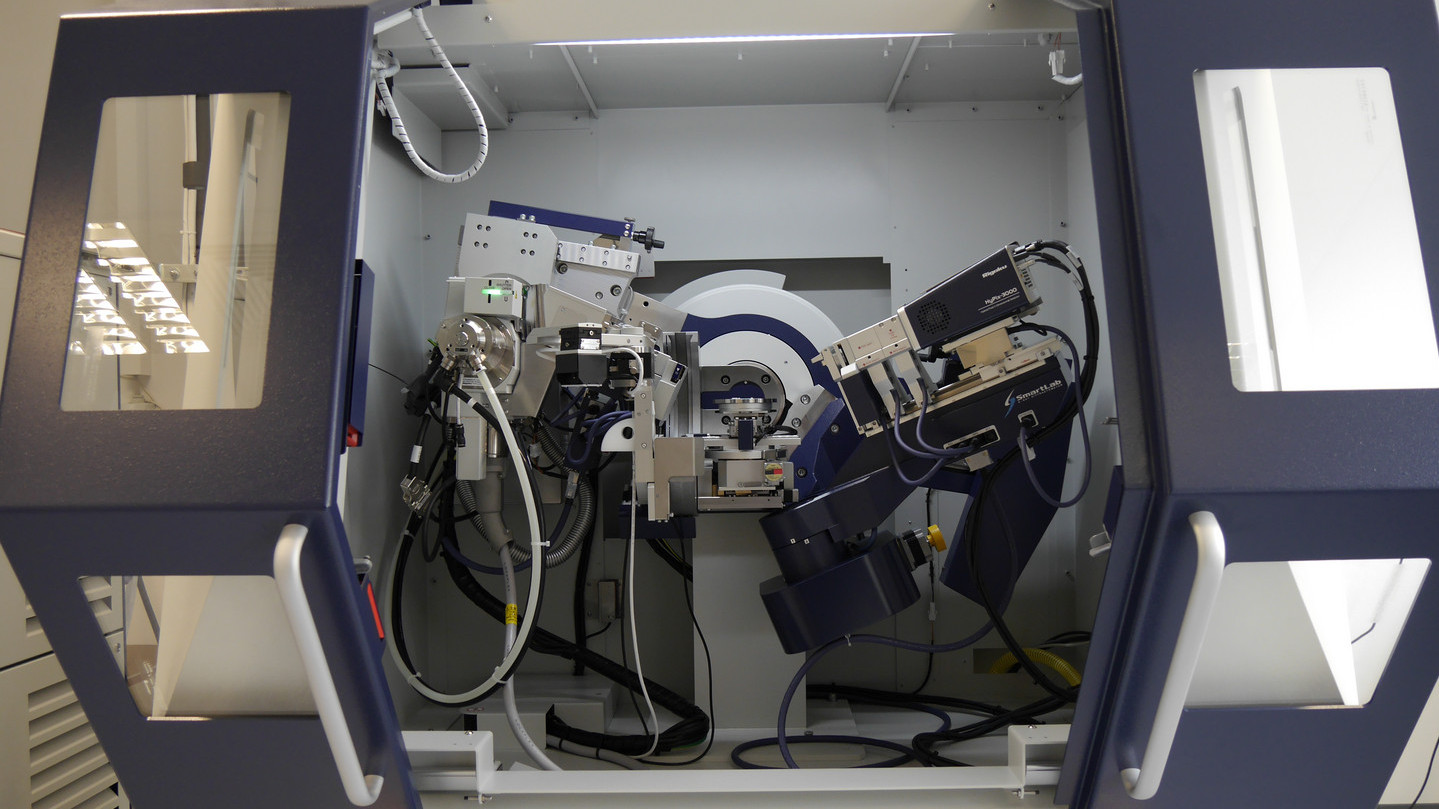
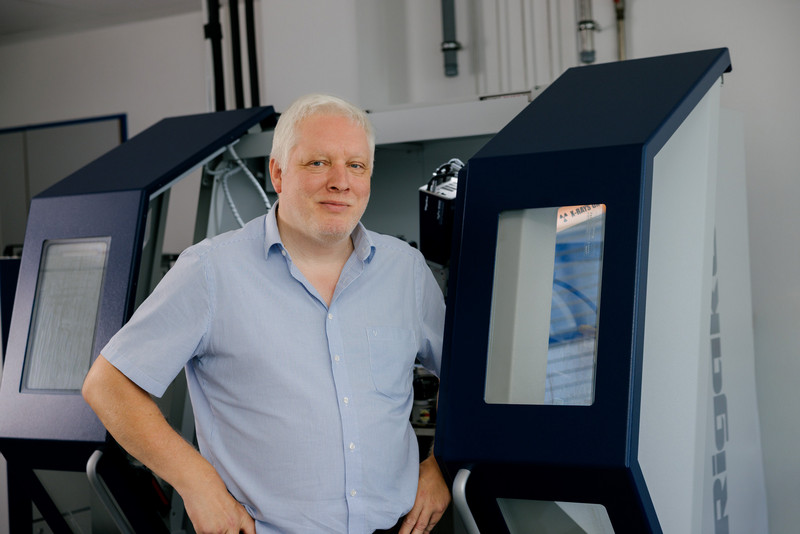
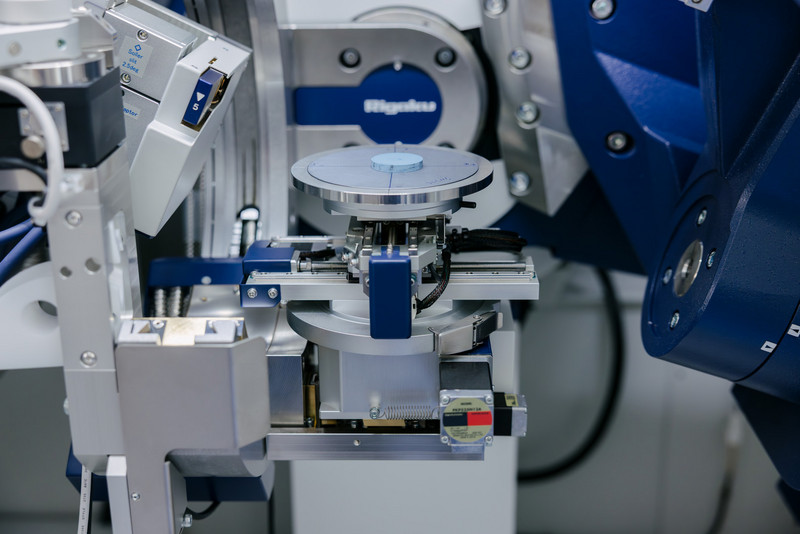
- RIGAKU SmartLab multifunctional X-ray diffractometer
- RIGAKU Ultima IV X-ray diffractometer
- IONTOF TOF.SIMS V Time-of-flight mass spectrometer
- KRATOS Axis Ultra DLD Photoelectron spectrometer
- MECADI Hydrogen permeation measurement system
- MOCON Oxygen transmission measurement system
- MOCON Water vapor transmission measurement system
- Zeiss SEM/EDX
- IBAD system with in-situ RHEED, AES/LEED, UHV-AFM/STM