Tailored Surfaces
Membrane technologies for removing contaminants from water
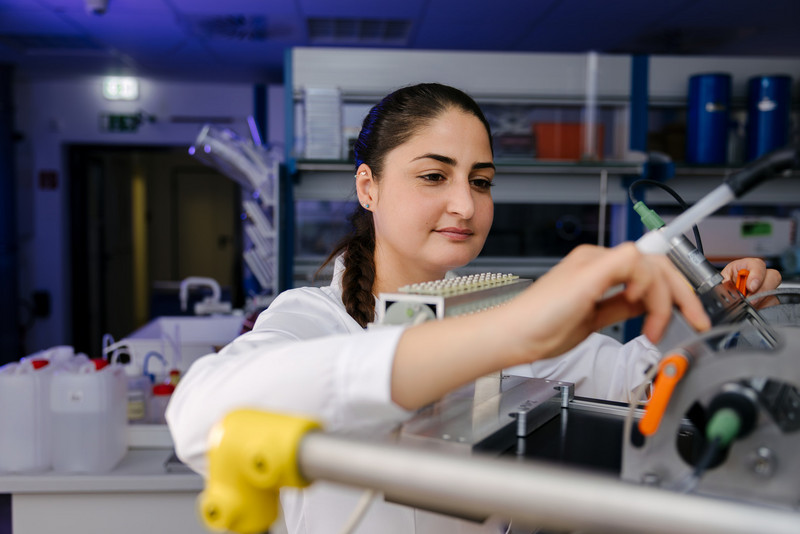
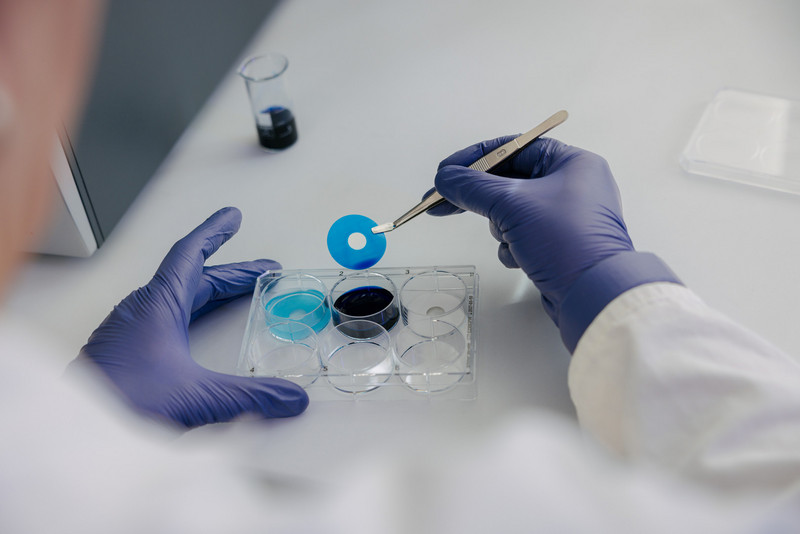
At the IOM, membrane materials under development are being applied to specific water treatment applications. The goal is to efficiently remove contaminants and optimize membrane systems for real operating conditions.
Applications in water treatment
- Removal of micropollutants (e.g., hormones, pharmaceuticals, nitrate/nitrite)
- Treatment of wastewater from anthropogenic sources
- Development of membrane-based solutions for the purification of complex contaminant mixtures
- Contributing to clean water, resource protection, and sustainable water treatment technologies
Mechanisms of contaminant removal
- Adsorption via specific interactions (e.g., charge, selective binding sites)
- Size exclusion via defined pore structures
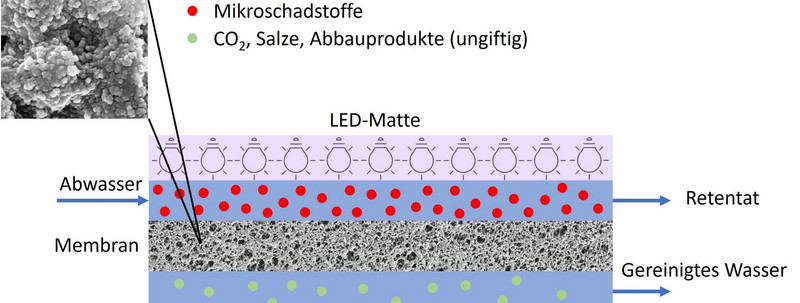
- Photocatalytic degradation (e.g., with TiO₂ or photosensitizers)
- Use of enzymatic reactions for substance conversion
Adaptation of membrane systems to specific applications
- Modification of membranes based on contaminant profile and operating conditions
- Combination of different contaminant removal mechanisms within a single system
- Integration of functional components such as catalysts or enzymes into membranes
- Development of application-specific membrane solutions
Technology transfer to water treatment applications
- Transfer of research results into application-oriented membrane systems
- Collaboration with partners from industry and end-users
- Development of solutions from concept to application-ready implementation
- Contributing to the introduction of new technologies in water treatment
Projects
Removal of PFAS (“forever chemicals”) from water using novel UV catalysts
As part of the ZIM project “Removal of PFAS from water using novel UV catalysts,” scientists at the IOM are collaborating with Purion GmbH to develop innovative processes for reliable water treatment.
Access to clean water is also becoming increasingly important in Germany. Climate change-related droughts and the release of contaminants such as per- and polyfluoroalkyl substances (PFAS), hormones, pesticides, and pharmaceutical residues are placing a significant strain on water resources. PFAS, in particular, are a major concern due to their extreme stability, as they are difficult to break down and can thus enter the food chain. Agriculture is one of the largest consumers of water, but the reuse of treated municipal wastewater for irrigation or animal husbandry is currently restricted because it may still contain contaminants. To enable safe water reuse as part of a circular economy, these contaminants must be removed reliably and in compliance with legal requirements.
The aim of the project is therefore to develop a process using novel UV catalysts that effectively removes pollutants such as PFAS, thereby enabling the safe reuse of water.
Funded by the BMWE
Stabilized ultrafiltration membranes with an integrated anti-fouling surface - Improving stability and performance
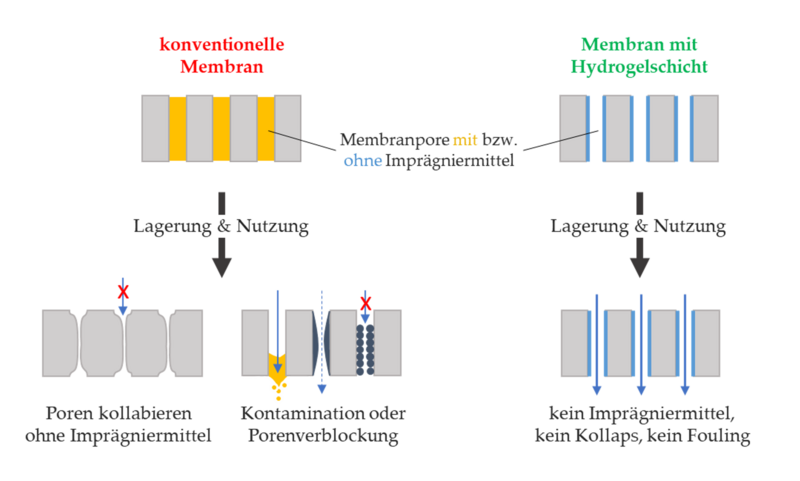
Hydro4F aims to improve the stability, service life, and resource efficiency of ultrafiltration membranes through customized membrane finishing. The project focuses on the development of a multifunctional membrane coating that reduces the need for additional, and in some cases toxic, impregnating agents. Modifying membranes with a thin stabilizing layer inside the membrane pores is intended to prevent pore collapse, reduce the tendency toward fouling, retain moisture, and slow down membrane drying. It promises an extended membrane service life, with reduced maintenance requirements and a lower need for cleaning chemicals. Due to the improved membrane properties, new areas of application may open up, including in hotter climates. Using electron beam technology, the stabilizing layers can be covalently bonded to the porous inner membrane surface in a single step and without additional chemical reagents. In this way, the project contributes to more resource-efficient and environmentally compatible filtration technologies.
Funded by BMFTR
Removal of PFAS (“forever chemicals”) from water using novel UV catalysts
As part of the ZIM project “Removal of PFAS from water using novel UV catalysts,” scientists at the IOM are collaborating with Purion GmbH to develop innovative processes for reliable water treatment.
Access to clean water is also becoming increasingly important in Germany. Climate change-related droughts and the release of contaminants such as per- and polyfluoroalkyl substances (PFAS), hormones, pesticides, and pharmaceutical residues are placing a significant strain on water resources. PFAS, in particular, are a major concern due to their extreme stability, as they are difficult to break down and can thus enter the food chain. Agriculture is one of the largest consumers of water, but the reuse of treated municipal wastewater for irrigation or animal husbandry is currently restricted because it may still contain contaminants. To enable safe water reuse as part of a circular economy, these contaminants must be removed reliably and in compliance with legal requirements.
The aim of the project is therefore to develop a process using novel UV catalysts that effectively removes pollutants such as PFAS, thereby enabling the safe reuse of water.
Funded by the BMWE
Publikation highlights
S. Liu, M. Ahsani, K. Fischer, A. Schulze, A.I. Schäfer
Photocatalytic removal of steroid hormone micropollutants under simulated sunlight using TiO2-coated electrospun nanofibers on poly(vinylidene fluoride) membrane
Sep. Purf. Technol. (2025), https://doi.org/10.1016/j.seppur.2025.134589
Solar-driven membrane photocatalysis holds promise for micropollutant removal. TiO2 is an environmentally benign and abundant semiconductor, but its limited light-harvesting capacity in the visible light region poses a challenge to its application as an effective photocatalyst. Herein, the degradation of steroid hormone (SH) micropollutants was investigated using TiO2 nanoparticles immobilized on a poly(vinylidene fluoride) microfiltration membrane (TiO2-PVDF) under simulated solar light (350–1150 nm) at environmentally relevant micropollutant concentrations (100 ng/L estradiol, E2). Key rate-limiting factors influencing SH removal were identified under various operational conditions. The results demonstrated that photon availability was the primary limiting factor for E2 degradation at light intensities below 40 mW/cm2. As the light intensity increased, the catalyst surface area (or catalyst loading) accessible to the light became the main constraint. The TiO2 surface area was thus increased by spinning PVDF nanofibers of varying thickness onto the membrane substrate to enhance the surface area available for TiO2 loading. A thicker nanofiber layer provided more surface area for TiO2 attachment (from 0.11 ± 0.01 to 0.33 ± 0.02 mg/cm2 as the thickness increased from 70 to 149 µm). However, this improvement came at the expense of light transmission, which decreased substantially from 55 to 19%. Increasing the nanofiber mat thickness from 70 to 149 µm did not significantly enhance the mass removed (from 18 ± 3 to 22 ± 2 ng/cm2), attributed to the reduced light transmission counterbalancing the benefits of increased TiO2 loading. Amplifying the light irradiance achieved limited enhancement in E2 removal, due to the reduced collision frequency between reactants within the enlarged pores of the nanofiber mat. These findings highlight the importance of striking innovative photocatalytic membrane design that achieves a balance between maximizing catalyst loading and preserving sufficient light penetration, while avoiding excessive pore enlargement. Such an approach is essential for improving the efficiency of micropollutant treatment in membrane photocatalysis.
S. Lotfi, K. Fischer, A. Schulze, A I. Schäfer
Photocatalytic degradation of steroid hormone micropollutants by TiO2-coated polyethersulfone membranes in a continuous flow-through process
Nat. Nanotechnol. (2022), https://doi.org/10.1038/s41565-022-01074-8
Micropollutants in the aquatic environment pose a high risk to both environmental and human health. The photocatalytic degradation of steroid hormones in a flow-through photocatalytic membrane reactor under UV light (365 nm) at environmentally relevant concentrations (50 ng l‑1 to 1 mg l–1) was examined using a polyethersulfone–titanium dioxide (PES–TiO2) membrane. The TiO2 nanoparticles (10–30 nm) were immobilized both on the surface and in the nanopores (220 nm) of the membrane. Water quality and operational parameters were evaluated to elucidate the limiting factors in the degradation of steroid hormones. Flow through the photocatalytic membrane increased contact between the micropollutants and •OH in the pores. Notably, 80% of both oestradiol and oestrone was removed from a 200 ng l‑1 feed (at 25 mW cm–2 and 300 l m–2 h–1). Progesterone and testosterone removal was lower at 44% and 33%, respectively. Increasing the oestradiol concentration to 1 mg l–1 resulted in 20% removal, whereas with a 100 ng l–1 solution, a maximum removal of 94% was achieved at 44 mW cm–2 and 60 l m–2 h–1. The effectiveness of the relatively well-known PES–TiO2 membrane for micropollutant removal has been demonstrated; this effectiveness is due to the nanoscale size of the membrane, which provides a high surface area and facilitates close contact of the radicals with the very small (0.8 nm) micropollutant at an extremely low, environmentally relevant concentration (100 ng l–1).
K. Fischer, J. Lohmann, E. Schmidt, T. H. Blaich, C. Belz, I. Thomas, et al.
Anti-biofouling membranes via hydrogel electron beam modification – a fundamental and applied study
Colloids Surf. A: Physicochem. Eng. Asp. (2023), https://doi.org/10.1016/j.colsurfa.2023.132044
Biofouling is still a major challenge in membrane science and accounts for up to 70% of the total costs of membrane-operated filtration systems. Thus, in this work, a thin layer of diverse synthetic hydrogels has been applied via electron beam-initiated polymerization on a polyethylene terephthalate (PET) track-etched membrane (fundamental study) as a simple model membrane and on a conventional used polyethersulfone (PES) ultrafiltration membrane (applied study) to study its anti-biofouling properties. The effect of hydrophilicity, roughness, surface charge, and degree of swelling of the attached hydrogel on algae (Chlorella Vulgaris) fouling was studied in a fundamental way, and long-time tests in a membrane bioreactor (MBR, filtration area 1.5 m2) over 11 months were performed on an applied scale. The hydrophilicity, roughness, and surface charge had only a minor to no effect on algae fouling. Only the degree of swelling had an impact on biofouling. The membranes with hydrogels with a low degree of swelling (6%) showed a lower loss of permeability (only 5%) after fouling, compared to a 25% loss with the highest degree of swelling (25%). During the operation over 11 months in a membrane bioreactor (MBR), the permeability is higher (ca. 10%) in a module equipped with hydrogel modified membranes, compared to a module with reference membranes. Thus, modification of membranes with a thin layer of a hydrogel results in an anti-biofouling surface. The degree of swelling is a decisive parameter to control biofouling.
S. Liu, E. Véron, S. Lotfi, K. Fischer, A. Schulze, A. Schäfer
Poly(vinylidene fluoride) membrane with immobilized TiO2 for degradation of steroid hormone micropollutants in a photocatalytic membrane reactor
J. Hazard. Mater. (2023), https://doi.org/10.1016/j.jhazmat.2023.130832
The lack of effective technologies to remove steroid hormones (SHs) from aquatic systems is a critical issue for both environment and public health. The performance of a flow-through photocatalytic membrane reactor (PMR) with TiO2 immobilized on a photostable poly(vinylidene fluoride) membrane (PVDF-TiO2) was evaluated in the context of SHs degradation at concentrations from 0.05 to 1000 µg/L under UV exposure (365 nm). A comprehensive investigation into the membrane preparation approach, including varying the surface Ti content and distribution, and membrane pore size, was conducted to gain insights on the rate-limiting steps for the SHs degradation. Increasing surface Ti content from 4% to 6.5% enhanced the 17β-estradiol (E2) degradation from 46 ± 12–81 ± 6%. Apparent degradation kinetics were independent of both TiO2 homogeneity and membrane pore size (0.1–0.45 µm). With optimized conditions, E2 removal was higher than 96 % at environmentally relevant feed concentration (100 ng/L), a flux of 60 L/m2h, 25 mW/cm2, and 6.5% Ti. These results indicated that the E2 degradation on the PVDF-TiO2 membrane was limited by the catalyst content and light penetration depth. Further exploration of novel TiO2 immobilization approach that can offer a larger catalyst content and light penetration is required to improve the micropollutant removal efficiency in PMR.
K. Fischer, A. Abdul Latif, J. Griebel, A. Prager, O. Shayestehpour, S. Zahn, A. Schulze
Immobilization of Bi2WO6 on polymer membranes for photocatalytic removal of micropollutants from water – a stable and visible light active alternative
Global Challenges (2024), https://doi.org/10.1016/j.jhazmat.2023.130832
In this work, bismuth tungstate Bi2WO6 is immobilized on polymer membranes to photocatalytically remove micropollutants from water as an alternative to titanium dioxide TiO2. A synthesis method for Bi2WO6 preparation and its immobilization on a polymer membrane is developed. Bi2WO6 is characterized using X-ray diffraction and UV–vis reflectance spectroscopy, while the membrane undergoes analysis through scanning electron microscopy, X-ray photoelectron spectroscopy, and degradation experiments. The density of states calculations for TiO2 and Bi2WO6, along with PVDF reactions with potential reactive species, are investigated by density functional theory. The generation of hydroxyl radicals •OH is investigated via the reaction of coumarin to umbelliferone via fluorescence probe detection and electron paramagnetic resonance. Increasing reactant concentration enhances Bi2WO6 crystallinity. Under UV light at pH 7 and 11, the Bi2WO6 membrane completely degrades propranolol in 3 and 1 h, respectively, remaining stable and reusable for over 10 cycles (30 h). Active under visible light with a bandgap of 2.91 eV, the Bi2WO6 membrane demonstrates superior stability compared to a TiO2 membrane during a 7-day exposure to UV light as Bi2WO6 does not generate •OH radicals. The Bi2WO6 membrane is an alternative for water pollutant degradation due to its visible light activity and long-term stability.
Equipment
- Upscaling – From Fundamentals to Application
- Photocatalysis (Degradation in different reactors – batch, continuous: over stream, cross-flow, dead-end)
- Adsorption (batch, continuous: over stream, cross-flow, dead-end)
- Enzymes (Hydrolases such as lipases, proteases and amylases, oxidoreductases such as laccase)
- Characterization of the degradation of various pollutants (diclofenac, ibuprofen, ranitidine, propanolol, aspartame, acesulfame K, cimetidine, ofloxacin, sulfomethoxazole, glyphosate
Analytics:
- Permeance (dead-end, cross-flow)
- Bubble point, MWCO, sieve curve analysis, Hg porosimetry, porometry
- Contact angle, surface energy
- Zeta potential, surface charge density
- Protein adsorption (BCA test)
- Fouling (proteins, algae, wastewater, surface water, etc.)
- Toxicity (luminescent bacteria)
- Enzyme activities (various enzymes)
- Photocatalytic activity (static and continuous operating modes)
- Adsorption of micropollutants
- SEM, TEM, AFM
- Tensile test, DMA
- TOC, ICP-OES, SPME-GC/MS
- IR, Raman, UV/VIS
- XPS, XRD, EDX
Video