Tailored Surfaces
Polymer membranes with precisely tunable properties for water treatment
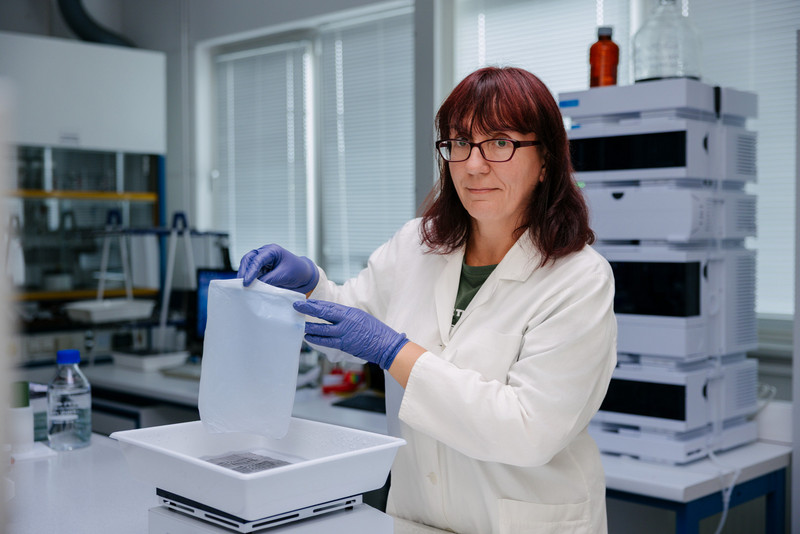
The IOM develops porous polymer membranes as the basis for high-performance filtration systems. The goal is to specifically tailor the structure and functionality of the membranes, particularly with regard to efficient substance separation and the removal of contaminants.
Development of porous polymer membranes
- Fabrication of porous polymer membranes with controlled pore structures for micro- and ultrafiltration
- Tuning of membrane morphology and separation performance for efficient water treatment
- Development of membrane materials for removing pollutants, particles, and micropollutants from water
- Adaptation of membrane properties to application-specific requirements in filtration and resource recovery
Preparation methods and process development
- Use of phase inversion processes to create porous structures
- Radiation-induced synthesis and modification of membrane materials
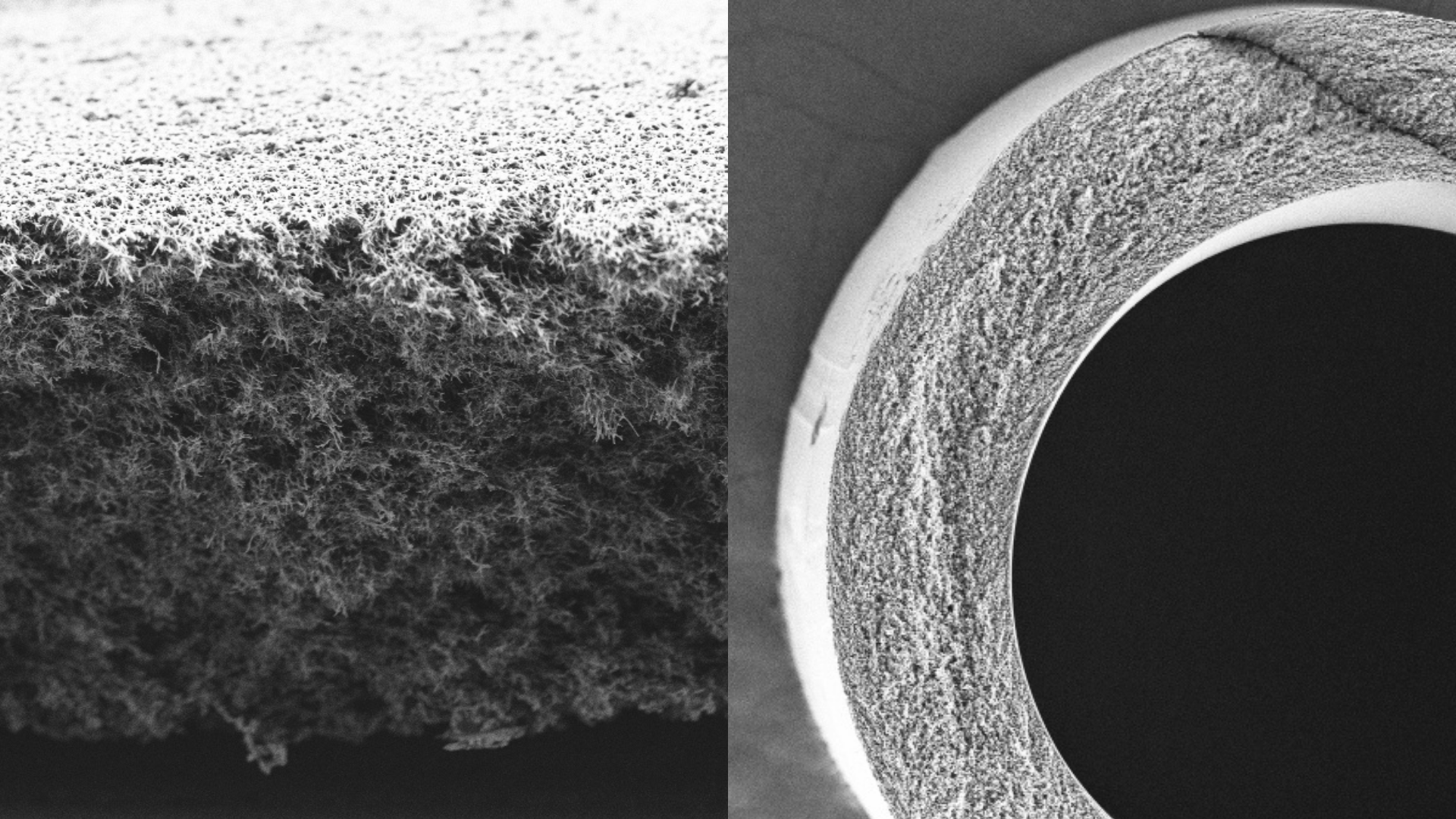
- Preparation of hollow fiber and flat-sheet membranes
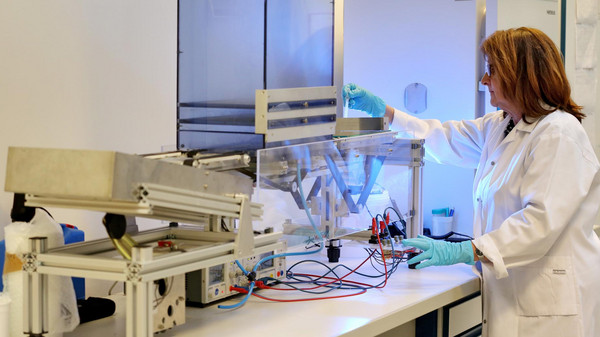
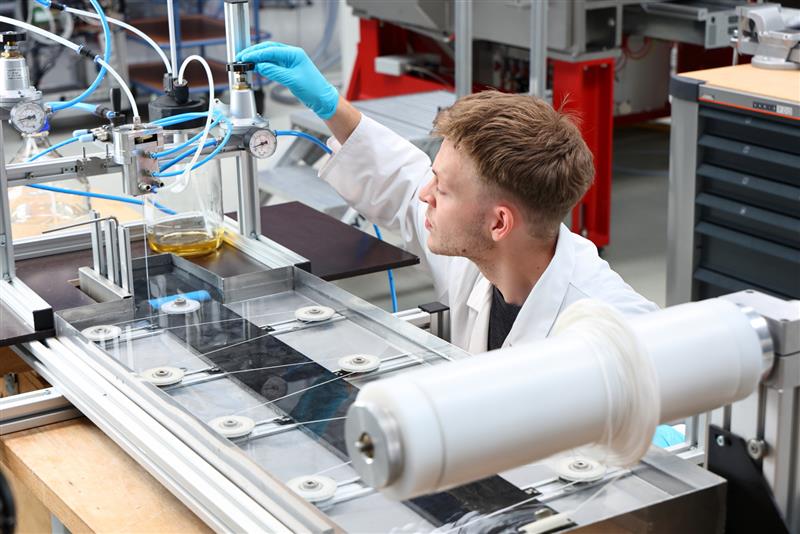
- Development and operation of semi-automated systems at the IOM
Sustainable material concepts
- Development of membranes based on recycled polymers
- Resource-efficient material use based on circular economy principles
- Investigation of sustainable alternatives to established materials
Development of functional membrane systems
- Providing the material basis for downstream functionalization
- Foundation for radiation-induced modification processes
- Contribution to the development of application-oriented and scalable membrane technologies
Projects
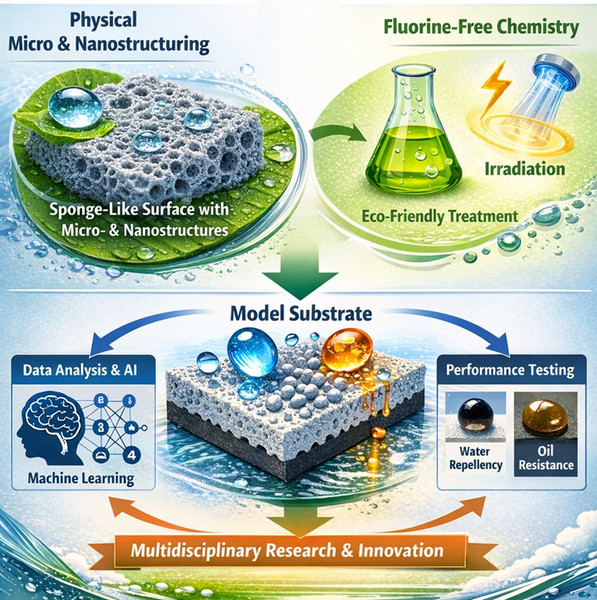
Basic research on the combination of chemical and physical technologies to achieve omniphobic surface properties
For decades, the industry has been using hydrophobic and oleophobic surfaces based on fluorinated materials, for example in stain-resistant textiles or grease-proof packaging. Due to environmental concerns, these chemicals—known as PFAS (per- and polyfluoroalkyl substances)—are increasingly being viewed with skepticism. The EU, represented by the European Chemicals Agency (ECHA), is seeking a complete ban and has already imposed restrictions on PFOS (2008), PFOA (2020), and PFHxS (2023).
Oleophobic properties and grease resistance are essential in many products. While these properties are often achieved through chemical functionalization with fluorinated compounds, physical structuring approaches such as micro- and nanostructuring are also being investigated as alternatives. Inspired by the lotus effect, combinations of micro- and nanostructures with hydrophobic surface chemistry have already been studied. However, their industrial implementation has not yet been successful, partly due to insufficient fundamental knowledge. Based on this, the project’s goal is to physically create hierarchically structured micro- and nanostructures on a model substrate and combine this approach with a chemical (fluorine-free) treatment. This multidisciplinary approach is supplemented by comprehensive investigations and evaluations using multivariate analyses and artificial intelligence methods (“machine learning”) to understand the influences of the individual processes and, in particular, their interactions.
Funded by the Saxon Development Bank (SAB/EFRE)

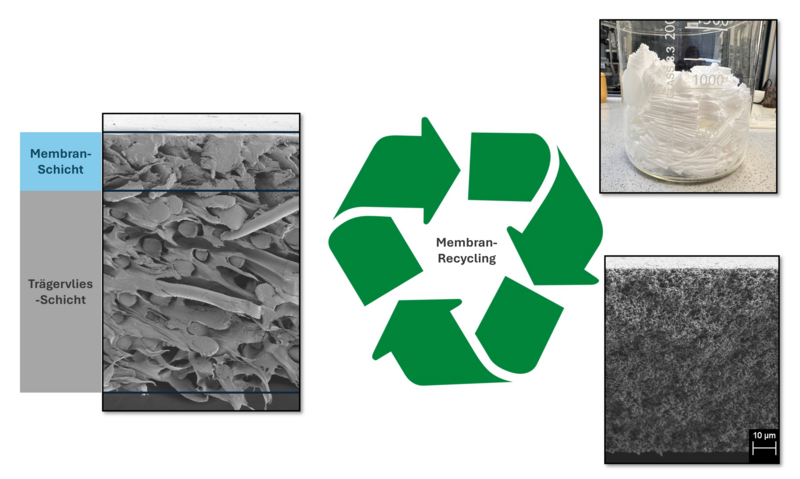
Holistic Recycling Concept for Technical Filtration Textiles for Material Recovery and the Production of New Filtration Media
The objectives of this project are to recycle the membrane fraction from membrane modules at the end of their service life. In this process, both the membrane polymers and the carrier nonwoven fabric will be recovered from the composite material and recycled by the project partner IUTA (Institute for Environment & Energy, Technology & Analytics e. V.). At the IOM, suitable solvent-based separation and purification steps are being developed to extract the recycled polymer, followed by the production and modification of high-quality membrane filters (initially freestanding, and later on recycled support nonwoven fabric from project partner Filzfabrik Fulda) based on these materials. The development process employs methods such as design of experiment as well as AI-based approaches such as “adaptive learning.” Furthermore, an economic and ecological assessment is being conducted in parallel with the process development to, on the one hand, ensure the economic viability of the process (evaluation of the costs for recovering recycled materials compared to virgin materials, energy requirements, etc.) and, on the other hand, to take environmental aspects into account (including the carbon footprint, also in comparison to new filter textiles). For the latter, a key focus is on reducing the use of hazardous and expensive solvents and replacing them with “green solvents” wherever possible. The produced filter textiles can be characterized in laboratory-scale tests at IOM and IUTA to evaluate their performance and identify promising variants from the parameter study for further testing under application-relevant conditions. The final objective is to prepare for the scale-up of filter textile fabrication together with project partner WTA Unisol and a membrane manufacturer.
Funded by BMFTR
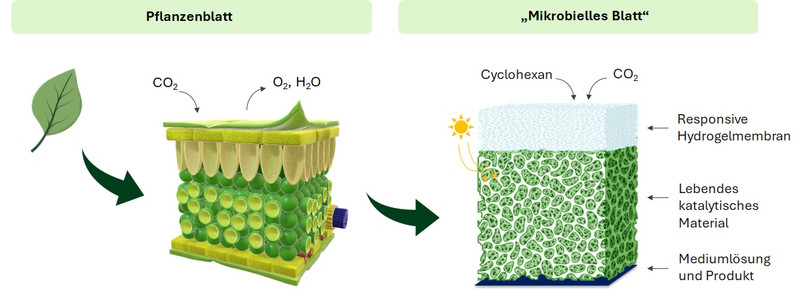
Combination of stimulus-responsive hydrogels and scaffold-supported microbial biofilms for the self-regulated catalytic activity of a microbial leaf
Plant photosynthesis is the central mechanism in nature for converting solar energy into chemical energy. For this reason, microbial photocatalysis is regarded as an efficient and sustainable alternative to current chemical processes. Conventional photobioreactors based on suspension cultures are often limited by low cell densities. Biofilms, in which microorganisms grow as self-immobilized communities on or within a support material, can achieve a higher cell density. However, high cell density and stability under varying environmental conditions, such as light and temperature, pose a challenge for stable catalytic production processes. The project aims to adapt the principle of plant leaves, which feature self-regulation and stable operation of the photosynthetic machinery. Using genetically modified phototrophic biofilms that grow at high cell densities in a porous cell culture substrate, which is equipped with a responsive hydrogel layer at the gas-liquid interface, the project seeks to achieve stable biocatalytic activity for chemical production. The pH- or temperature (T)-responsive hydrogel layers will react to the metabolic state of the microbial consortia within the porous material, thereby enabling self-regulation of catalytic activity through control of gas permeation, similar to plant leaf surfaces. The concept of a “microbial leaf” is being implemented based on our expertise in microbial consortia for chemical production (e.g., Synechocystis, Pseudomonas) and the development of cell culture carriers, including the synthesis of pH- and T-responsive hydrogels, to demonstrate the self-regulated activity of a living catalytic material (LCM). In our case study, we will investigate the performance of microbial biofilms in porous polymer materials for the catalytic conversion of cyclohexane to ɛ-caprolactone or adipic acid as precursors for industrial polymer synthesis. We aim to demonstrate that low- and high-light conditions, similar to the day-night cycle, influence the microenvironment of the LCM in such a way that it leads to swollen and collapsed states of the pH-responsive hydrogel layer. This responsive hydrogel layer is synthesized via electron beam-initiated polymerization of N-isopropylacrylamideand acrylic acid monomers with tailored phase transition ranges. The different swelling states and physicochemical properties of the hydrogel layer, triggered by biofilm activity, control the inflow of cyclohexane for the catalytic reaction of the adaptive LCM, thereby enabling optimal performance under varying light conditions. In the future, our findings will allow us to fully exploit the potential of the microbial leaf concept and enable self-stabilized biotechnological processes with broad applicability.
Funded by the DFG
Basic research on the combination of chemical and physical technologies to achieve omniphobic surface properties
For decades, the industry has been using hydrophobic and oleophobic surfaces based on fluorinated materials, for example in stain-resistant textiles or grease-proof packaging. Due to environmental concerns, these chemicals—known as PFAS (per- and polyfluoroalkyl substances)—are increasingly being viewed with skepticism. The EU, represented by the European Chemicals Agency (ECHA), is seeking a complete ban and has already imposed restrictions on PFOS (2008), PFOA (2020), and PFHxS (2023).
Oleophobic properties and grease resistance are essential in many products. While these properties are often achieved through chemical functionalization with fluorinated compounds, physical structuring approaches such as micro- and nanostructuring are also being investigated as alternatives. Inspired by the lotus effect, combinations of micro- and nanostructures with hydrophobic surface chemistry have already been studied. However, their industrial implementation has not yet been successful, partly due to insufficient fundamental knowledge. Based on this, the project’s goal is to physically create hierarchically structured micro- and nanostructures on a model substrate and combine this approach with a chemical (fluorine-free) treatment. This multidisciplinary approach is supplemented by comprehensive investigations and evaluations using multivariate analyses and artificial intelligence methods (“machine learning”) to understand the influences of the individual processes and, in particular, their interactions.
Funded by the Saxon Development Bank (SAB/EFRE)
Publikation highlights
D. Breite, M. Went, M. Krause, M. Kühnert, A. Prager, L. Stieler, N. Schönherr, A. Schulze
Preparation of flat sheet recycled PET membranes from high temperature solutions via a NIPS-TIPS hybrid separation process
Sep. Purif. Technol. (2026), https://doi.org/10.1016/j.seppur.2025.135910
Polyethylene terephthalate (PET) has very interesting properties for use as a membrane material and is available in large quantities as it is a recycledpolymer. It has high mechanical and thermal stability, and its solvent resistance allows the use of organic solvents even at high temperature. However, this resistance to solvents makes it almost impossible to prepare porous membranes from PET via nonsolvent-induced phase separation (NIPS) under ambient conditions. So far, commercial PET membranes are prepared by track-etching of dense PET films. However, this type of membrane has insufficient porosity and permeability. In this study, a new, easy-to-implement approach to prepare PET membranes via NIPS-TIPS hybrid separation process using solutions of PET in N-methyl-2-pyrrolidone at elevated temperature (180 °C) is presented. By using heat, PET could be dissolved in sufficient concentrations for the preparation of membranes. By quickly applying these solutions to a substrate or glass plate and subsequent immersion in the coagulation bath, stable membranes were prepared. The various preparation parameters were investigated, and further focus was put onto investigating membrane preparation from different recycling sources.
T. Şener Raman, C. Claus, O. Daikos, T. Scherzer, A. Prager, A. Lotnyk, L. Stieler, R. Konieczny, N. Lippmann, A. Kaiser, R. Werdehausen, B. Abel, A. Schulze
Tailoring PEGDA/gelatin hydrogels with silver nanoparticles: Mechanical characterization and bacterial inhibition studies
Int. J. Biol. Macromol. (2026), https://doi.org/10.1016/j.ijbiomac.2025.149996
Silver nanoparticles (AgNPs) are promising antimicrobial agents for combating bacterial infections in vitro and in vivo. This study explores the mechanical properties of PEGDA/gelatin hybrid hydrogels synthesized with varying Ag concentrations via electron beam irradiation and their bacterial interactions at the single-cell level, in real-time and in situ. Increased AgNPs concentration slightly alters the mechanical properties of these hydrogels, which are engineered to mimic human skin. Infrared microspectroscopy reveals that silver ions interact with PEGDA and gelatin before irradiation, affecting hydrogel homogeneity. SEM-EDX and TEM morphological analyses, together with XPS surface characterization, confirmed the distribution of AgNPs within the hydrogel matrix. In parallel, their nanostructural features revealed that the AgNP concentration influenced particle size distributions. Remarkably, hydrogels containing AgNPs synthesized from 200 ppm AgNO3 released only 0.35 ppm of silver after 7 days, highlighting their strong ion-retention capacity. Real-time imaging of Escherichia coli demonstrates that hydrogels containing AgNPs disrupt Min protein oscillation, a key regulator of bacterial division, with a bactericidal effect observed within 18 min for hydrogels containing AgNPs synthesized from 200 ppm AgNO3. Antibacterial efficacy correlates with AgNPs concentration in the hydrogels, as confirmed by quantitative and qualitative analyses. Notably, the cytotoxic effects of hydrogels incorporating AgNPs at different concentrations were examined. Among them, H50 demonstrated a negligible influence on cell viability relative to the control group. These findings provide insights into the bactericidal mechanisms of AgNPs, influenced by mechanical and chemical factors.
K.H. Leopold, D. Breite, M. Schmidt, A. Prager, M. Went, M. Kühnert, D. Enke, A. Schulze
Design of sponge-like PES hollow fiber membranes using the environmentally friendly solvent N,N-dimethyl lactamide
Sep. Purif. Technol. (2025), https://doi.org/10.1016/j.seppur.2025.132625
Changing the process conditions for the preparation of hollow fiber membranes can result in significant alterations of the structure and performance of the resulting membrane. Consequently, the preparation of membranes with the desired membrane structure using new, environmentally friendly solvents requires a large amount of experimental data. The design of experiments (DoE) approach represents a valuable tool for the development of new membranes with high performance through a reduced number of experiments. Additionally, it facilitates the understanding of the correlation between preparation parameters and the resulting membrane structure, performance, and mechanical properties. Given the necessity of reducing the environmental impact of membrane preparation through the replacement of conventional solvents, the design of new membranes using more environmentally friendly solvents is a crucial objective. In this study, the DoE approach was employed to develop macrovoid-free hollow fiber membranes using the less harmful and more environmentally friendly solvent N,N-dimethyl lactamide. Empirical models were established allowing the prediction of membrane structure and mechanical strength. Consequently, the optimal settings of the DoE allowed the preparation of an ultrafiltration membrane that exhibited the desired mechanical strength (6 MPa), retention (cut-off at 100 kDa), permeance (50 LMHB), and homogeneous structure (at least 99% sponge-like structure).
S. Glass, M. Schmidt, P. Merten, A. Abdul Latif, K. Fischer, A. Schulze, P. Friederich, V. Filiz
Design of Modified Polymer Membranes Using Machine Learning
ACS Applied Materials & Interfaces (2024), doi.org/10.1021/acsami.3c18805
Surface modification is an attractive strategy to adjust the properties of polymer membranes. Unfortunately, predictive structure–processing–property relationships between the modification strategies and membrane performance are often unknown. One possibility to tackle this challenge is the application of data-driven methods such as machine learning. In this study, we applied machine learning methods to data sets containing the performance parameters of modified membranes. The resulting machine learning models were used to predict performance parameters, such as the pure water permeability and the zeta potential of membranes modified with new substances. The predictions had low prediction errors, which allowed us to generalize them to similar membrane modifications and processing conditions. Additionally, machine learning methods were able to identify the impact of substance properties and process parameters on the resulting membrane properties. Our results demonstrate that small data sets, as they are common in materials science, can be used as training data for predictive machine learning models. Therefore, machine learning shows great potential as a tool to expedite the development of high-performance membranes while reducing the time and costs associated with the development process at the same time.
Z. Niavarani, D. Breite, A. Prager, I. Thomas, M. Kuehnert, B. Abel, R. Gläser, A. Schulze
Synthesis of composite imprinted polymer membranes for the selective removal of 17β-estradiol from water
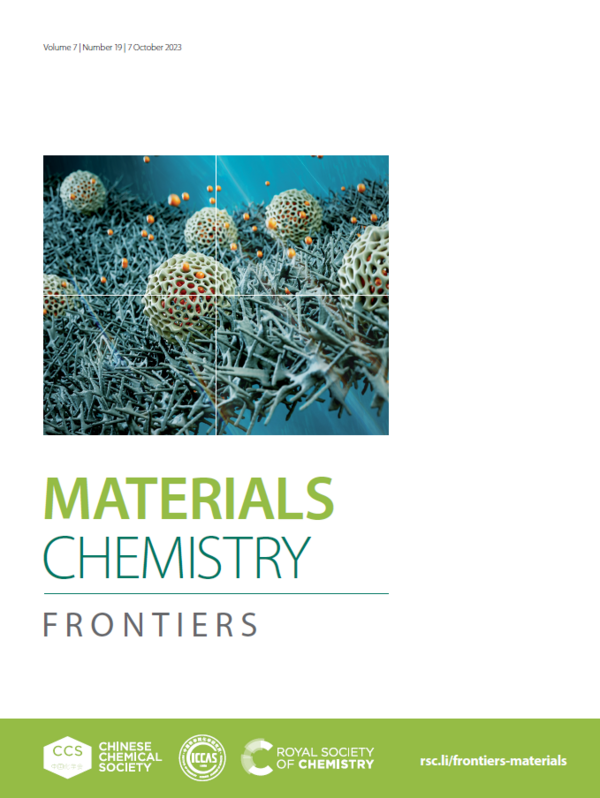
Mater. Chem. Front. (2023), https://doi.org/10.1039/D3QM00345K
Composite microfiltration polyethersulfone membranes incorporating molecularly imprinted particles (MIPs) were developed for efficient and selective adsorption of 17β-estradiol from water. MIP particles were synthesized via precipitation polymerization, with 17β-estradiol as the template molecule. The composite membranes were prepared by embedding the MIPs into the membrane matrices using a phase inversion process. Electron beam irradiation was used to covalently immobilize the MIP particles within the membrane scaffold. The synthesized membranes were characterized using scanning electron microscopy (SEM), X-ray photoelectron spectroscopy (XPS), water contact angle analysis, permeation tests and mercury porosimetry. The adsorption loading, selectivity, reusability, and adsorption isotherms were studied through batch and dynamic adsorption experiments. The results indicated significant adsorption loading of 17β-estradiol (12.9 ± 1 mg g−1) and selectivity factors as high as 6.2 and 12.5 for 17β-estradiol in the presence of model micropollutants (such as bisphenol A and citalopram), respectively. Moreover, the composite membranes were regenerated and reused without any significant loss in adsorption loading for 10 subsequent cycles. The maximum adsorption capacity of 17β-estradiol on the composite membrane, calculated by fitting experimental data with the Langmuir equation, was 21.9 mg g−1, which is more than a 200-fold increase in the adsorption loading compared to commercial nanofiltration. These composite microfiltration membranes exhibit a high adsorption loading accompanied by lower pressure requirements for filtration, high water permeation, and extended reusability, rendering them a viable and sustainable option for water purification processes.
Equipment
- Preparation and development of polymer membranes (micro- and ultrafiltration) with specifically tunable properties and functionalities using semi-automated systems (flat-sheet and hollow fiber membranes)
- Preparation of polymer membranes based on recycled materials
- Analytics:
- Permeance (dead-end, cross-flow)
- Bubble point, MWCO, sieve curve analysis, Hg porosimetry, porometry
- Contact angle, surface energy
- Zeta potential, surface charge density
- Protein adsorption (BCA test)
- Fouling (proteins, algae, wastewater, surface water, etc.)
- Enzyme activities (various enzymes)
- Photocatalytic activity (static and continuous operating mode)
- Adsorption of micropollutants
- SEM, TEM, AFM
- Tensile test, DMA
- TOC, ICP-OES, SPME-GC/MS
- IR, Raman, UV/VIS
- XPS, XRD, EDX
Video